Showing posts with label Music. Show all posts

Friday, May 13, 2022

Is anyone still following this?

 And if so, did you know that I have a new band?

They're called Manifest Zone, and yes: that is an Eberron reference.

I may have gotten out of blogging, but if you've been wondering what I've been up to in the interim... /gestures wildly at cosmic nu-metal


www.manifestzone.net


eye see you


Friday, August 25, 2017

The Biggest Mistake Indie Artists Keep Making

How's that for a clickbait title? Completing the series discussed here, and really hammering home something that made my life harder than it had to be in my old career.

You’re a smart artist. You’re savvy to social media, promotional techniques, and how to carry yourself like a star. Most importantly, your craft is on point; people want to see you perform, promoters want to book you, and everybody wants to buy your merch.

Awesome.

How hard are you making it for them?

Full-Contact Promotion

Let’s say that I’m a concert promoter, and I want to book you for a show. How do I get in contact with you? DMs on Twitter? Facebook Messenger? Leaving a comment on your Instagram?

Because if that’s the answer, you’re missing out. Friend of the Blog1 Jonathan Killstring had this to say:

“Back when I was a concert promoter, I was the crazy young kid, because I’d actually talk to people through MySpace, which was the big platform at the time. Even then, I preferred to do everything in email. Booking agents, other promoters, tour managers – everybody used email. Back then we had Blackberries, today it’s smartphones, but it’s the same thing; a contact email for the band — one that people actually check — is what people in the business are looking for.”

If you’re not making it easy for people to contact you, you’re making it hard.

Don’t make it hard.

Centralize

Make an email address. One Email Address. YouOfficial at Gmail dot com is probably available, so stop reading and go register the address. We’ll wait.

You back? Awesome.

Once you’ve established your primary contact email, use it for everything. Talking to a promoter? Official address. Ordering Merch? Official address. Setting up an interview with a college newspaper? Ordering CDs? Purchasing online promotion?

You get the idea.

Make it Easy

Using your primary email for everything means that it’ll be in your contacts’ address books, making it easier for them to reach out to you in the future. Still, there’s no substitute for making that easy in the first place.

Plaster this thing. Your website, Twitter, Instagram, YouTube – if someone’s looking at a site affiliated with your band, they should be able to find your contact info. Don’t hide it under paragraphs about your influences – put that ish right up top.

People trying to contact acts aren’t looking to waste time checking messages across platforms, and if it’s not easy to get a hold of you, they’ll find someone who makes it easy. Basically,  the more effort someone has to go through to contact you, the more likely it is you’re missing out on gigs, press coverage, and other opportunities. Heck, you’re probably missing out on concert attendance and album sales.

Don’t make it complicated. Have a dedicated “contact us” section with your email.

The Ball’s in Your Court — Don’t Drop It

This should go without saying, but we’ll say it anyway; if someone gets in contact with you, for the love of all that’s holy, don’t leave them hanging. Get back to people within 24 hours, even if it’s just to say “I’m thinking about it.”

Make life easy for industry professionals, and they'll happily return the favor. Make life harder for them, and they'll be more likely to find someone who won't. 

* * *

1 - At this point, I was pretty sure they weren't going to pay me, and it was starting to show. It is possible that I am no longer a friend of the blog. /kanyeshrug 


Thursday, August 24, 2017

Getting Sponsorship for Indie Musicians

The penultimate entry in the series discussed here. 


Sponsorships. Nothing says big-time like an endorsement deal. It's for the big-time, established acts, so obviously, independent musicians shouldn’t even bother. Right?

Wrong. Very, very wrong.

“We’d get sponsorships for our bands all the time, even the ones who weren’t signed” says former concert promoter/artist manager Jonathan Killstring1. “Sometimes, it wasn’t even a specific thing; we happened to know somebody at an energy drink company, or people from a soda company just liked rock music, and told us to figure something out.”

Sponsorships are out there; it’s just a matter of asking.

If you’re interested in reading more on the topic, Simon Tam’s book “How to Get Sponsorships & Endorsements” has some good, common-sense advice2, and the Kindle version usually goes for about $4. For now, here’s the basics you’ll want for getting started.

Your Packet

If you want a sponsorship, you’ll want to speak your target’s language. That means putting together a packet; a nice digital file (usually .pdf), and a high-quality print version. It doesn’t matter how great you are – if they only take physical packets, your email’s not getting you anywhere.

To that end, here’s the format you’ll want to use.

1: The Cover

It should look distinctive; not too busy. Your band logo’s probably all the art you need, but consider tailoring it for each company you send it to; something like “2017 [Band Name] [Company Name] Sponsorship Proposal” should do it. Give them the opportunity to think about working with you.

2: Your “One Sheet”

If they only see one page, this is it. A dramatic, pro photo, major stats/accomplishments, press coverage,  or the big winner: testimonials from existing sponsors. You’re answering the question “what can this artist do for us?” Make sure that they read the answer as "expand our brand awareness, making us fat stacks of cash."

3: Partnership

Here’s where you go into more detail on how the sponsor benefits from working with you. Why are you a good fit? Remember, this entire thing is meant to make someone else's job easier; you're taking some of their advertising burden off of their to-do list.

4. Fact Sheet

What, exactly, are they sponsoring? A tour? You in general? One event?

Make sure they’ve got the details. Be specific: who/what/where/when/why – don’t leave them in the dark. You’re here to get them exposure, which will turn into profits; spell out exactly how that happens, and what you expect them to do on their side.

5: Key Marketing Information

This builds on the last category. As an artist, you represent a niche market; demographics that your sponsor is going to want to reach. Know your audience, and be really clear on how your branding works; if you’re a horrorcore rapper, you’re not going to rep their product in a family-friendly way.

Then again, death metal babies need diapers too, so you can always give it a shot. Everybody wants to go viral, so marketers are much more willing to try unorthodox solutions than they were in years past3.

6: Co-Branding Opportunities

3-5 pitches on how this could work in practice. Illustrate how this could work; let them see how working with you can expand their reach to your demographic. This will make you stand out from the crowd; marketing departments are always trying to get at hard-to-reach demographics; you represent that opportunity. Let’m know.

7: Benefit List

This should mostly be a recap; by now, you should have shown why they benefit from sponsoring you.

Spell it out anyway.

Focus on the custom benefits — go beyond simple logo placement — but cover everything. This is basically your formal offer; be clear on what they get for their expense.

8: The Sponsorship Agreement

Make it easy to fill out and return. If physical, including a SASE, and printing the agreement on carbonless copy paper — so they can tear off a copy for themselves, and send one to you — makes a nice touch, as does a QR code for the digital version. Can't stress this enough; make this part as easy as you can manage.

It’s Within Reach

Musicians represent a unique opportunity for marketers; don’t sell yourself short! There’s room for you in the sponsorship game, so step up and claim it!

* * *

1 - Man, this guy was such a quotable source! Can you tell that I'd gotten a little punchy by this point?

2 - It's a little outdated, but provides a nice outline. Probably worth four bucks if you're interested in the subject, though it's nothing you couldn't find online with some searching.

3 - Obnoxiously so. "We need a viral video" is like saying "we need a hit song," only with far less likelihood that prior success is an indicator of future behavior. Still, mention that you've got "viral potential," and watch eyes light up. Don't overdo it, but plant the seed.

Monday, August 21, 2017

Maximizing Profits for Musicians

Continuing the series discussed here. 


Time was, it wasn’t cool for musical artists to talk about business. In fact, “business” was seen as a universal evil, synonymous with selling out, a lack of talent and street cred, and a whole other slew of negative traits nobody wanted associated with their act.

Hip-Hop changed all that.

From P. Diddy to Jay-Z, 50 Cent to Drake, the hip-hop artist-as-mogul is an enviable image; a symbol of power, independence, and savvy. But even if you’re not in the hip-hop scene, remaining willfully ignorant of how your music makes money doesn’t make you a rebel; it just makes you ignorant.

With that in mind, here are some tips to make sure the business side of your artistic career is holding up its end of the bargain.

Make it Easy to Pay You

Not just for your merch table, but for promoters, venues, etc. Take cash, sure. But if you’ve got a smartphone or tablet (I’m assuming you do), getting a card reader of some kind (Square, Paypal, etc.) is super-affordable, and stupidly easy. And that’s not even getting into online pay options, like Paypal1.

On that note; Venmo

Whether it stays hot or not, Venmo is blowing up right now; probably because it’s super-easy to send money with.  On the west coast, it’s fast becoming a verb; “Venmo me" is in common parlance. Makes sense; once you're set up, sending funds is basically as easy as sending a text. Not only is this a great way to get paid for merch, gigs, etc., but if you let people know that you accept tips via Venmo, you’d be surprised how much extra cash shows up after each concert.

Up Your Merch Game

Really? This again?

Yep.

If it seems like we talk a lot about merch here, it’s because it’s the least-understood revenue stream for indie artists, and one of the most potentially profitable2. According to merch inventory/POS tracking platform AtVenu, for 500-1,000 capacity venues, the average merch dollar per-head is $3.65. And while those numbers don’t scale perfectly, if you’ve got 100 people at your show, and you’re not making at least $365, you’ve probably got room for improvement.

Have a big, well-lit, attractive display; Christmas lights are great for this. Have someone at your booth as often as possible – not just after your show. Take care of your merch, and it’ll take care of you.

Live Streaming

Not just for concerts; consider live-streaming the occasional rehearsal. In 2016, Brent Morgan was making over $10k/month streaming acoustic performances from his bedroom.

Streaming is a big thing now. YouTube, Twitch, Facebook; pick a format, and get in on it. If nothing else, it's a great way to reach out to your fans, and make new ones.

Above All, Stay in the Game

For those of us in the business, music isn’t just something we do; it’s a massive part of who we are. It’s not a hobby, or a “creative outlet” – it’s our heart and soul, shared with other people. Nothing stings like seeing another talented artist get out of the game because they’re not making any money.

Spend the time to get your business aspects right, and ironically, you’ll have more time and energy to focus on making music.

Which was always the point.

* * *

1 - This also leaves a legal paper trail, which is more important than people realize. Not only can you show "yeah, this is our usual take from a show," but it makes it harder for the other side to try and pull a fast one. "Of course we paid them their full guarantee, I don't know what they're talking about!" Call people on their BS with evidence.

2 - If I could go back in time, this is what I'd be shoving down my bands' throats. The ones I was in, the ones that I managed; it was absolutely neglected by pretty much all my clients. 

Sunday, August 20, 2017

Thinking Outside the Booth: Making Your Merch Stand Out in a Crowd

Continuing the series discussed here. And paying tribute to some of the coolest stuff that I saw in my time in the industry, and a few things I wish I had.

You’ve got the standards. Your t-shirts are dope, your hoodies sell out, and you’ve even got buttons, stickers, and maybe some extra wearables at your booth. There’s no denying it; your merch game is solid.

But you want more.

Never fear, my friend; there’s a lot more to the world of Artist merchendise than we’ve covered1. Unique merch can become a conversation starter between your fans and their friends — or as we like to think of them, your future fans — as well as an avenue for the die-hard fan who already has all your stuff to keep supporting you.

It’s gonna get a little weird; let’s not waste any time.

Jewelry

Okay, this isn’t that weird. Even so, there aren't a ton of options readily available; you're going to have to get creative.

Dog Tags

For rappers, metal bands, or anybody with a song referencing soldiers, warriors, etc., custom dog tags are absolutely money. Oriental Trading Company has some good stuff for cheap, letting you put text on red, black, and other colored dog tags without ordering a ton at once. These are perfect if you’ve got a lyric that works in the format. Not always a huge seller, but distinctive and fun.

Custom Necklaces

So, this is likely to be limited-run, high-cost, custom work. But, if you’ve got a fanbase that is:

  • Big enough to support the run 
  • Dedicated enough to purchase high-ticket items…
  • …and actually able to afford them
Then these can be your golden ticket. If you don’t know anybody who does custom work, your best bet is finding someone on Etsy whose work you like, and talking to them about doing some custom pieces for your band. This can work well for all involved, and has the added benefit of getting you in contact with an artist who can make other types of jewelry, such as earrings, for you. It'll be expensive, but if you've got a market there, it's a fun, unique opportunity.

Gauges/Plugs

This is another custom item that is either a goldmine or a trap, depending on your audience. But if plugs and tunnels outnumber standard piercings or unpierced ears in your audience, they just might go nuts over these. It’s difficult to find custom plugs, but DHGate has a couple offerings, and Google is ever your friend in these endeavors. And it's a hell of an endorsement, and awesome publicity. If you've got a circular logo, this can be a home run.

Busted Stuff

No lie. If you break something during the course of your performances, don’t just throw it away – autograph it, and set it at your merch table. Drumheads are the classic here, but the point is to turn garbage into collectables; feel free to get creative.

Grown-Up Stuff for Grown-Ups

We’re all adults here; and those of us who aren’t probably want this stuff more.

Shot Glasses

A classic. Don’t neglect mugs and water bottles, but Shot (and pint) glasses tend to sell much better.

Lighters

Inkhead has some great stuff here – from disposable “gas station specials” to Zippos, flameless and electronic lighters; you can get some great designs on these little guys, and it always pays when someone asks about your fans’ cool lighter. Plus, it encourages fans to bust out the lighters during your ballads.

Other Stuff

We’ve seen all kinds of things over the years; from incense burners, to underwear of various sorts, to (ahem) “adult toys,” the sky’s the limit. Just make sure it’s something your fans will actually buy – nobody wants a box of unsold, branded adult paraphernalia sitting in their garage2.

Bespoke Merch

Tailor things to your own work. Have a song about a nasty breakup? See if you can get a custom tissue box. Spit bars about the flask in your jacket? Get some custom ones made. The only limit is your creativity, and what you can get produced, but if you make something that ties into your music, it'll sell a lot better than generic item #32.

Make it Yours

Bottom line, if you offer something unique, interesting, and unusual, it's more than just another option for your hardcore fans to support you; it's a source of word-of-mouth buzz when you're not around. Any of these should be more than enough to make your merch stand out.

* * *

1 - Somehow.

2 - True story: I used to play D&D with a punk bassist, who had a crate of panties with his band's logo on them, as well as some more... creative merch. It was funny, but it was a hell of a cash sink for the poor band.

Saturday, August 19, 2017

Getting Started With Merch — Step Three: All The Best to All The Rest

Continuing the series discussed here. Part One is here, part two is here.


We’re still droning on about merchandise here, and for good reason; it’s an integral part of how modern artists get paid. A lot of these articles assume that you’ve already got some merch, and you want to make it better. That’s all well and good, but what about artists who are just getting started with merch?

This guide aims to make monetizing your band a painless process. We’ve talked about your music, and basic wearables; and while those are the meat-and-potatoes of your merch table (or vegan soy jerky, if that’s your jam), you also want to look at different items — especially lower-cost offerings. Bottom line,  if you’re not selling these items, you’re probably selling yourself short. 

Let’s dive into the wonderful world of random swag, shall we?

Other Wearables

So! You’ve got a couple t-shirts, maybe a hoodie or two. Awesome.

But there are so many other body parts that aren’t covered in your gear. And that simply won’t do.

Hats

If video games have taught us one thing, it's that people love buying hats.

Jokes aside, there’s a gold mine of opportunity here, so long as you tailor it to your crowd. Beanie hats are always a good idea — more so if you’re someplace with cold winters, but good either way — and bandannas with your logo have countless uses, and make a nice impulse purchase. Take a look at your audience, and take notes. See a lot of snapback trucker hats? Get one with your logo on it, and watch your fans go nuts.

Sweatbands

Don’t laugh – these can be money, if you know your audience. First off, there’s the classic wrist “sweatband” style, beloved by 80’s workout aficionados, as well as drummers who hate dropping their sticks mid-song, and anyone else whose wrists are either cold or sweaty. These can be cheap, fun, and you can also get headbands while you’re at it. Depending on the style of your scene, this is either a license to print money, or a waste of it – so do your research and pay attention. But if it works for you, it’s a solid revenue stream.

Also, don’t sleep on headbands – they’re not just “Sweatin’ to the Oldies” style (though you can certainly get those too); modern polar fleece headbands are super-popular in cold-weather climates, and in certain segments of the post-hardcore scene. Either way, they’re ridiculously cheap if bought in bulk, and make a nice, unique touch for your fans.

Wristbands

Not to be confused with the above, modern wristbands — think those “Livestrong” or “WWJD” bracelets — are stupidly cheap to produce, and can go with pretty much any outfit. Drop a small version of your logo, and band name or lyric on one, and you’re good to go. 

Classic Add-Ons

If you don’t have these, get some, full stop, no excuses.

Stickers

Inexpensive for you and your fans, easy free advertising – they’re a classic for a reason. Sell’em for a buck, give’em away with CDs – it’s all good.

Buttons

Inexpensive for you and your fans, easy free advertising – they’re a classic for a reason. If you’ve got crafty friends, or cash to drop up-front, you can also buy your own button maker, and proceed to make money hand-over-fist.

Posters

Super cheap to make, easy to autograph; a staple for a reason. If you tour, do a new one for each tour; suddenly, you’ve got collectibles.

Good to Go

With these staples in place, you can set up your merch table with confidence, knowing that you’ve got at least something for every fan.


Friday, August 18, 2017

Getting Started With Merch — Step Two: Wearables

Continuing the series discussed here. Part One is here.


If it seems like we're a broken record with our discussion of merch, that's not an accident; it’s an integral part of how modern artists get paid. A lot of these articles assume that you’ve already got some merch, and you want to make it better. That’s all well and good, but what about artists who are just getting started with merch?

This guide aims to make monetizing your band a painless process. Today, we’re going to talk about wearables – t-shirts, hoodies, and other gear for the human form. Getting started can be daunting, but never fear: we’ve already made the mistakes (and talked to those who have), so you won’t have to.

Starting With Nothing, Working With Designers

First of all, starting with your logo is probably the way to go. If you don’t have a logo, or any other existing designs, you can usually get someone to make one for you on the cheap. Friends, family members, art students at the local university — odds are, you already know somebody who can:
·         Make you a killer design, and
·         Do it way more affordably than hiring a graphic design firm, professional graffiti artist, etc.
·         Will generate a bunch of hype for you, by telling all of their friends and family about the awesome band/emcee/DJ they’re making sweet art for

At the indie level, it’s all about relationships. Don’t abuse them by trying to take advantage of people — but as an indie artist, even though you’re not as established as a chart-topping mainstream star, you’re still a professional, and you still get paid for your work. Treat artists the same way, and you’ll both blow up together. Be respectful, and pay them for their work. 

Once you’ve got a design (or several), it’s time to put it on some wearables.

T-Shirts

The classic. You’ve seen them, you probably have a couple, and you know you need at least one for your merch stand. Let’s dive in.

The iconic black music t-shirt is a classic for a reason; most people can find room for a black t-shirt in their wardrobe, and they’re pretty easy to manufacture, and most designs look pretty fly on black, as opposed to other colors.

Having said that, don’t write-off the idea of having multiple designs just yet. If you’ve got some cool art that didn’t make it into the album, or a proposed logo that you didn’t like as much as the final product, here’s a great place to use them. Fans LOVE t-shirts; if you give them the option to buy different designs, many will.

However you go, you can often get shirts that feel better and cost less if you go with a lighter shirt, something in the 5.3-5.6 oz. range.

Hoodies

Another standby, especially if you live somewhere cold. Zipper hoodies are the standard, but cost a little more to produce than pullovers. Having said that, it’s best not to rock the boat when starting out; get a black zipper hoodie with your logo on it (front or back), and your fans’ll buy them.

Simple is Good

Lastly, don’t overdo it. Merch options are good, but when starting out, a lot of artists waste money on a variety of unpopular designs. Start with a few solid offerings, and slowly build up your options; soon enough, you’ll basically be a clothing line unto yourself.

Getting Started With Merch — Step One: Your Music

Continuing the series discussed here.


We talk a lot about merchandise here, and for good reason; it’s an integral part of how modern artists get paid. A lot of these articles assume that you’ve already got some merch, and you want to make it better. That’s all well and good, but what about artists who are just getting started with merch?

Bottom line; you’re a musician. People have come to hear you perform your music, and you owe it to them — and yourself — to make it easy for them to not only listen to it later, but for you to make some cash off the deal.

In the modern era, people tend to buy music in three ways:
  1. CDs
  2. Vinyl
  3. Downloads
Let's break it down.

Compact Discs

Of these three, CDs are still your best bet1. Even if your fans take them home, drop them in the computer, and immediately turn them into .mp3s, people like the tangibility of buying something that they can take home. Additionally, they’re super-easy to sign (if you’re not autographing stuff for free at your table, you’re either missing out, or playing stadiums), and still portable enough to fit in a purse or pocket.

When it comes to getting your CDs, Cravedog and Discmakers are the industry standards2, but there’s a ton of options available.

Vinyl Records

Having said that, don’t sleep on vinyl; it sounds great, it's got value as a collectible, and if you’ve got a hip(ster), millennial audience, odds are they’ve got some nice turntables among their ranks. If you can move vinyl, it’s a great way to get your band noticed – when somebody puts your record on at a party, it’s an event. That’s great publicity; anytime you can get people buzzing about you when you’re not presentis a win. Vinyl’s usually less profitable than CDs or downloads, but the people who use it tend to love it.

Gotta Groove Records, based out of Cleveland OH3, is our favorite, but again; Google is your friend. Find something you’re happy with.

Digital Downloads

“But wait,” you say, “how am I gonna sell digital goods at my merch table?” A fine question, my friend.

Here’s how.

Step One: Set up Your Downloads

If you haven’t already done so, set up your music store of choice. Soundcloud, iTunes, Bandcamp, Google Play Music – pick one. Or, if you’re using several (which you really should), pick your favorite — ideally the one with the highest profit margin for you, and the lowest price for your fans.

Step Two: Get a QR code

There’s a ton of free QR code generators online; pick one, and generate a link to your storefront of choice. Now, people can buy your music on their phones while standing in line to buy a t-shirt. Done.

Step Three (optional): Get Fancy with your QR Code

There are a couple ways to do this: individual strips (that you can autograph), a banner at your merch table, or just a cool concert poster with the QR code incorporated into the design. Printing out a setlist with the QR code for your night's concert is cheap, and provides a unique, autographable tangible artifact to go with your download.

Your Fans Want to Buy Your Music

At the end of the day, your fans are looking for ways to support you, and if they're your fans, they probably like your music. That means they'll want to buy it, so they can listen to it. Simple, right? Make it easy, make it fun, and it’ll make you money.


* * *
1 - It's worth noting that CD duplication was one of the services my former employers had monetized. That said, I don't feel like this is disingenuous; tangibility matters.

2 - No pitch here, these are the old standbys. Also, Google is your friend.

3 - As long as you live in the continental US.

Thursday, August 17, 2017

The Tour Survival Guide — Part Two

Continuing the series discussed here, and the branch from here. This is basically a shorter version of my Con Survival Guide, but it's reprinted here for the sake of continuity.


Adrenaline alone will not sustain you — spend long enough on the road, and fatigue is inevitable. So how do you avoid it? To answer that, friend of the blog Jonathan Killstring has some tips from his time touring the Midwest with artists like Sworn Enemy, MC Chris, and Foxy Shazam; he’s made mistakes, so you don’t have to.1

Follow the 3-2-1 Rule

This is a classic guideline — whether you’re going on vacation, tour, or a grand adventure to save the world, follow the 3-2-1 rule, and you’ll make it out ok.

The idea is simple. Every day, you should get a bare minimum of:

3 HOURS OF SLEEP

More is better, obviously, but this is your floor.

2 ACTUAL MEALS

With real food and everything. Cheetos don’t count. Gas station jerky doesn’t count. Your body will thank you.

1 SHOWER

Often tricky to manage, and requiring some forethought, planning, and willingness to shower super-quickly, this is nonetheless incredibly important. Not just because you’ll be sweating your butt off under hot lights every night, but because when hygine goes, sickness sets in. Nothing is worse than cancelling dates because you got a nasty cold; so use that hand sanitizer, and don’t neglect your hygine.

That goes double if you’re touring in a van with other people.

Hydrate Yourself

Water is your friend. Beer and soda don’t count. When you perform, you’re gonna sweat. Even if it’s the dead of winter, you pack people in a club, and hit the lights, you’re gonna sweat more than normal. And if you don’t hydrate properly, you’re going to wind up getting sick, or just not having the energy to perform. These people were good enough to see you out on tour; you owe it to them to make each show memorable, and you can’t do that if you’re parched.

A quick test to see if you’re dehydrated; grab a sports drink — Gatorade is the classic, but anything will do — and down it. If it tastes amazing, and you drink it in one gulp, congratulations; you are officially dehydrated.

You might want to repeat that last step a couple times.

Talc Up

Another thing to keep in mind with all that sweat, is that you’re going to get drenched. I heartily recommend preempting those problems with some talcum powder, like Gold Bond.

Laugh all you want, but you’d be surprised how many guitarists’ low stances were the product of nasty rashes. Make sure you can perform — both on-stage, and in the, ahem, after-parties — by powdering up at the beginning of your day, and maybe before you go on-stage.

A word of caution: don’t apply the highly-medicated stuff to anything resembling an open wound. There is a special sort of hell awaiting anyone so foolish.

Hydrate Yourself

Whether you're gearing up your summer tour schedule, or just prepping for an outdoor festival, you want to make it through to the end in one piece. And ideally, you want to make a good impression on people. In my travels, I haven't always managed both. Occasionally, I've managed neither.

Do better than I have done. Be the Superstar you were destined to become. Barring that, maybe just don't get sick.

~Killstring


We couldn’t have said it better ourselves2.

* * *

1 - Disclaimer: this is not actually why I made the mistakes in question.

2 - Because Killstring is our ghostwriter, but it's all good. I may have been getting a little testy about the whole "not getting paid" thing by this point. :)

The Tour Survival Guide — Part One

The series discussed here continues. 

It's time to go out on tour. You’ve booked the dates, polished your set list, and found someone to feed your cat. The only thing left to do is hit the open road, and embrace the spirit of adventure, right?

Maybe. 

Whether it’s your first tour, or you’re a veteran road warrior, there are always some factors to consider before heading out on tour.

Have a Sleeping Plan

Getting to sleep on the road is difficult in the best of circumstances, and if you (or a bandmate) likes to party, it becomes even more important. Money is tight, and hotels add up quickly, so many artists work out sleeping arrangements with friends, local acts, and occasionally even fans in the cities where they’re performing.

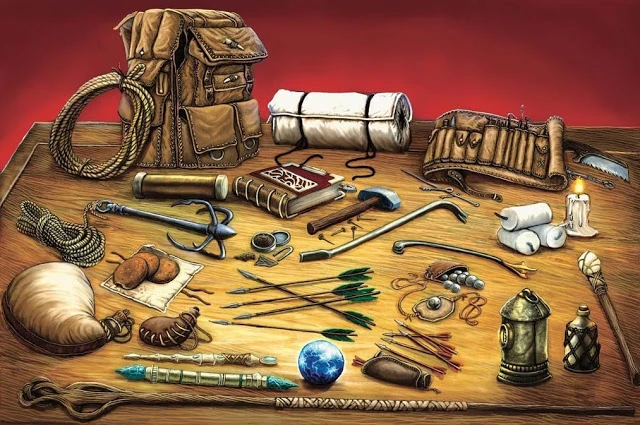
And 50 ft. of rope couldn't hurt.
Pulling this off requires advance planning, a willingness to improvise when things invariably fall through, and above all else; sleeping bags.

No, seriously. Make like a D&D character and pack a bedroll.

“I slept on so many floors — hotel and otherwise — on my first tour, my back was killing me by the end1,” says Jonathan Killstring, former tour manager (and occasional touring musician). “I always tell new bands to bring a sleeping bag or two; and they’ve always wound up needing them.”

If you’re not sleeping, you’re not going to be performing at your best. So plan ahead.

Over-Prepare Your Budget

Figure out how much cash you’re going to spend on things like gas, food, and the occasional bit of lodging. Then budget a little more for performance-related expenses.

“I was a drummer before playing guitar, and I broke a lot of strings until I learned some technique,” says Killstring. “That was an expensive first tour — but at least I got a nickname out of it2!” If your concerts involve a live band, you can assume the worst; broken strings, missing drumsticks, etc., so bring spares with you so that you don't have to scramble mid-set. This goes for props, too; if you always wear sunglasses onstage, bring a couple spares. If part of your onstage persona is a hat, scarf, whatever, bring a couple; worst-case scenario, you can toss some into the crowd for a memorable memento.

Your budget should include cash, supplies, and — this part is important — shouldn’t count on money coming in. If you’ve never toured before, you don’t really know what your cut of the door is going to be like, nor what your merch profits will be.  And even if you have guarantees, that doesn’t mean that every venue will hold up their end of the bargain3. Sure, you’ll probably get the money eventually — after the right legal threats — but that doesn’t put gas in your tank today.

Never put yourself in a position where you can get stranded.

This involves saving a lot of cash before you head out. Hopefully it’s not necessary, but a few extra shifts at your day job beats the heck out of being stranded in the middle of Iowa because you ran out of fuel.

Consider the Weather

While it sounds mundane, never ignore the effects of Mother Nature on your tour.

Driving in blizzard season? Don’t plan to travel the speed limit on freeways; odds are you’ll be going much slower, increasing your travel times. Gearing up for a summer tour? Well, you’d better make sure you’ve got working A/C, lest you arrive at the venue in need of medical care. And if you've never driven on mountain roads in fog, don't expect to make good time coming back from high-altitude venues.

Embrace the Adventure

No plan survives contact with a tour, and that’s ok. Touring is an adventure – stay flexible, open, and be ready to embrace the challenge, and you’ll have an experience like no other. “Even at its worst,” says Killstring, “I was still getting to live my dream. That’s something not everybody can say.” Touring can be grueling, but there’s nothing else quite like it. Enjoy the ride.

Seriously though, pack a sleeping bag.

* * *

1 -  FACT. I was also the guy driving. Let me tell you, nothing sucks quite like playing the drums in a punk band when you've got a sore back and haven't slept, except maybe driving all night afterwards.

2 - It was bad. At my big return home show, I called up musician friends of mine, and asked them to bring some extra guitars. By the end of the show, I was playing an acoustic with a soundhole magnetic pickup through my amp, wailing away on the 4 remaining good strings. Guitars strewn across the stage, my bassist proclaimed "Johnny Killstring, everybody," and the crowd ate it up. 

It's been my name ever since. (I did eventually learn some subtlety.)

3 - Sad, but true.

Self-Taught Fastball — Pitching for Indie Artists

Kicking off the series discussed here.

Let’s get it out of the way: asking for stuff is a pain, and it feels crummy to do. Amanda Palmer wrote a bestseller on the topic, and it can be summed up as “asking for stuff is usually difficult for artists; it’s better if you’re real with people, though.” Or, as she puts it herself, “I think people have been obsessed with the wrong question, which is ‘How do we make people pay for music. What if we started asking, ‘How do we let people pay for music?’”

Even if you’re not a fan of Palmer’s work — many aren’t1 — there’s a takeaway there. Think about it; are there any bands you like? YouTube creators, RPG writers, etc.? If you like their stuff, don't you try to find a way to support them, even if it's just spreading the word about this cool think you've found?

Why would your fans be any different?

This doesn't have to be like pulling teeth; if you’ve got fans, and you've shown you can make more, concert venues want you to perform, tour agents want to put you on the road, and labels want to sell your music. Basically, you’ve already got the main thing you need to embark on a career in music.

The key is to stop making it so hard for them2.

Email Pitches

There are a lot of resources online about writing pitch emails; and while many of them have a greasy, “sales” feel to them, there’s still a lot of good advice there. More than we can cover here, in fact, so it’s worth reading up on if you’re not confident in your ability to make a pitch.

Keep it Real

We can’t stress this enough; in your music, in your promotion, and in your pitches — authenticity matters. Former industry professional Jonathan Killstring3 doesn't mince any words on the topic4: “It didn’t matter what side of the equation I was on; playing, promoting, whatever... it felt like there was always somebody trying to trick me.”

“It was so refreshing when somebody would be straight-up and honest with me,” he adds. Promoter and artist manager Terry Coughlin agrees. “So many people are trying to pull a fast one on you in his business,” says Coughlin. “You’ve gotta be on your toes.” When speaking to industry professionals, avoid the try-hard hyperbole, and overused sales tactics, and just be yourself. It’ll be a refreshing change for the people on the other end of your pitch5, which means they'll be more likely to work with you in the future.

Win First, Then go to War

It’s like Sun Tzu said. Do your research ahead of time; if you’re going to send out 50 emails, get everybody’s contact information organized ahead of time. Know who you’re writing, and why. Nothing gets ignored more quickly than a form letter, but if you actually show that you know who your target is, they’re more likely to pay attention.

Clarity

Know what you want, and ask for it. If you’re clear, they’ll be clear in response. Promoters need to book bands, managers need clients; everyone you're talking to needs some amount of what you have to offer. So show them how you can make their job easier, and you'd be surprised the opportunities you can find. People don’t like saying no, but first you have to ask. 

Seriously, You Have to Ask

Don’t make a pitch with no call to action – if you want them to book your band, say so! If you want a sponsorship, tell them! Emails that consist of “aren’t I great?” go nowhere. Make it easier for the recipient; if they don't know what you want, how are they ever going to give it to you?

Remember: You’re Here to Help

When you’re pitching to someone, they have a job to do. Your goal in the email is to answer their question, “why do I care?” Know their job, and find a way to make it easier. Explain how you're offering something that they need, and why they should believe you. Tailor your pitch to the person who's receiving it.


Do that, and your pitches will go much, much better.

* * *
1 - I am.

2 - So, as a former concert promoter, band manager, tour manager, and somebody who worked with a couple different labels, let me assure you; the above isn't hyperbole. I had my own preferences, sure, but at the end of the day, I had a job to do. Bands that could help me do that job got called back.

3 - Expect a lot of this; I was ghostwriting, which meant that I could always rely on me as a source. I've decided to keep this artifact of the style, as I find it illustrative. And far more legit than a lot of attributed quotes in press releases, though that's another can of worms entirely.

4 - I am absolutely mincing words here. It was fucking vile.

5 - This whole series was basically a list of things that would have made me happy in my old job. My co-workers too. I got out of the game, there's no gimmick here; just some stuff that I hoped - and still hope - might be useful, based on my perspective.

Friday, June 24, 2016

Creating a soundtrack for your RPG

Music is powerful. 

It's been a part of my life in many ways since I was young. I spent the better part of six years performing it, promoting it, eating1, breathing and sleeping it. During my first go-round in college - before taking those aforementioned six years - I was a theatre student, focused on sound design. I studied the impact that music can have on a dramatic scene, the way it could elevate a mood, increase tension, or accentuate tone. Especially in "black box" theatre, an awful lot is left up to the audience's imagination, and music is a great way to excite and enhance that.

I don't know if I was ever good as a sound designer. There was a lot of praise, and I worked on some award-nominated stuff, but it's not like I set the world on fire as a college student.

But!

I definitely tried to learn as much as I could. Live sound, studying pro audio at the Recording Workshop, and dozens of little projects here and there. I'd like to think that I picked some things up along the way.

Is it any wonder that as I became more and more involved with RPGs, that I'd try to apply what I'd learned?

Lovely album all the way 'round, and full of great "intro themes."

So, what are we doing here?

Soundtracking your RPG sessions can be a great way to enhance the experience for everyone. Not unlike live theatre or written fiction, there's a lot that your imagination needs to fill in to complete the scene. Visuals, emotions, physical posture - so much of what's going on in a scene can be intuited through a soundtrack.

It can also be a great big distraction if handled indelicately.

We're not going to delve too deeply into communication theory2, but there's some basic concepts that are important:

The Tone, or how the mood of music will inform the mood of the scene
The Association of a particular sound cue with some story element
The Practical Realities of adding additional sounds to a sound-based medium

These aren't scientific terms, just some things we should keep in mind.

Tone

This is what most people think of when we talk about soundtracks - the excellent use of musical score in Game of Thrones, or the Mass Effect games is a great example of this - emotional content underscored by appropriate music. Sad scenes can be punctuated by appropriately melancholic or sorrowful melodies, and a pulse-pounding action scene certainly benefits from a complimentary score.

Association

This requires some forethought, but linked elements can provide consistency. Instruments, composers, and specific songs can all form associations that you can use later. If a certain song plays when an antagonist is introduced, it can not only highlight elements of their character you want to emphasize, but can help accentuate those traits in later scenes.

Needless to say, you'll want to avoid anything that your table already has a strong association with. If everybody's played Mass Effect, don't use its most memorable songs in your soundtrack; that'll conjure up memories of the other property3 distracting from your game.

I tend to emphasize associations for situations rather than characters, as too much micro-managing while GMing leads to a disjointed experience. Speaking of!

Practical Realities

RPGs are a primarily auditory medium - information is conferred via the spoken word more than anything else. Music can be a powerful tool to fill in conceptual gaps, but it's also more noise; you want it to enhance your game, not distract your table. Some things to keep in mind:

First, volume levels. Ever step into a bar, and you can't hear your friends over the chatter and music? That's partially due to what we call a Sound Floor - basically, the ambient noise level you have to talk over in order to be heard. Your music should be loud enough to be audible, and to provide enjoyment in its own right, but not so loud that you need to talk over it. It's not a bad guideline to set it to a level that feels about right, then walk it back a little. You can always turn it up later.

Secondly, frequency. Not as in how often something happens, but rather the frequency it vibrates at. Human speech tends to hang out in the 150hz-500hz range, so you'll want to cut that by a couple decibels for gaming purposes. The idea is to carve out some sonic real estate for people's voices, give them room so they're not fighting with the score.

In other words, don't EQ your soundtrack to sound great by itself; it's a supporting actor, there to make the stars look good.
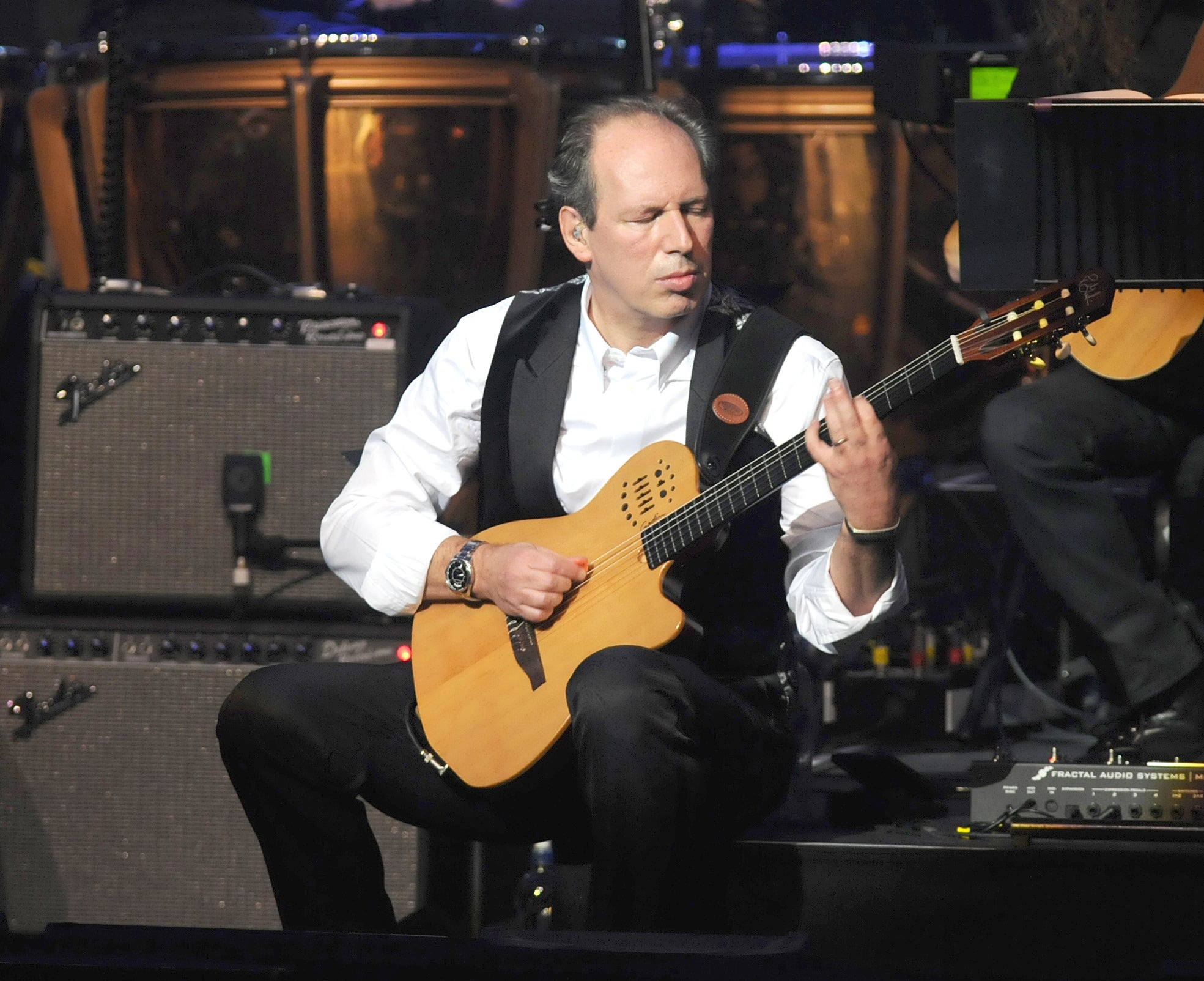
More like HANDSOME Zimmer, amirite?
(Please don't get a restraining order, I just like your work.)

Thirdly, you don't want anything that's too busy. Epic Trailer Music like Audiomachine or Two Steps From Hell can be lovely, but there's usually so much going on that it can get distracting, and detract from the game. Likewise - and I know this might sound strange and heretical - but that film soundtrack you love so much, the one that would be perfect for your RPG?

Don't use it. Ever.

Look, I love Hans Zimmer as much as the next guy, possibly even more. But his music is designed for films, which are timed down to the frame. Long quiet stretches are interspersed with sudden, dramatic crescendos. In the film, they tie in perfectly to the action. 

In an RPG, they come out of nowhere - they draw attention away from the story, and put it on the weirdly sudden burst of French horns and violas. Don't do it.

Finally, you want to avoid anything with lyrics in a language anyone speaks, and probably altogether (remember that bit about making space for the human voice? Competing human voices don't help.) It can work great in film, anime, even some video games - but ours is an auditory medium, and it's just too much information in the same channel.

Where do I get it from?


It bears repeating: not all music is going to work for these purposes. In fact, music that you like - because it's interesting - may not work so well. Because it's interesting. 

Stay away from anything designed for a symphonic orchestra - while this is some of the most beautiful music imaginable, it runs directly counter to our purposes. And while film scores tend to be pretty bad, video game soundtracks can be downright amazing for our purposes. They're designed to be more dynamic. Events don't happen at a set pace in games; your score needs to support myriad options in order to be successful. This, by the way, is exactly what we want. Beyond that, the New Age genre has some delightful contributions, as do many electronic "chillout" artists. 
Recommendations could - and soon will! - take up an entire post by themselves. But the key to remember is that you want something that's less dynamic than most music. Is there something you like, but find boring? Now's the time to bust it out.

Putting it All Together


So now that we've covered the basics, let's talk about actually putting together a soundtrack for your game. What follows is how I do it - it's not the One True Way, but it is A Way I Guess, which capitalises just as nicely.

When I'm getting ready to start a new campaign, I put together a couple playlists. I use Google Play, but anything that lets you assemble playlists is fine. I generally want a couple playlists ready to go:

  • A "Chill" playlist. This is my default, it sets the tone, but mostly provides ambiance
  • An "Action" playlist. Fight scenes, parkour chases, starship battles. Something more uptempo that delineates these scenes from normal play
  • A "Suspense" or "Investigation" playlist. Nothing too intense, but more downtempo, minor key stuff. 
  • An "Emotional" playlist, that's appropriate for sad, tragic, melancholic scenes.
And those are my big four. I'll usually have more - often lots more - but that should get me through most games I run. If you're less intent on dancing on your players' heartstrings4 then you could probably get away without the last one. Typically, I'll want the "Chill" playlist to be pretty long - something that covers the length of the game session, if I can help it. That way, if I want to just set it and forget it, I can do so without worrying that it'll cut out at an inopportune moment.

I personally like to stream music from a tablet to a bluetooth receiver - this way I've got my finger on the volume if I need it, and I can switch playlists with ease. When it comes time to switch, I'll often cue up the playlist I want to play next, so there's no jarring transitions.

Of course, sometimes I want jarring transitions. "Boss Fight Music" is a time-honored tradition, and one that I make extensive use of.

I also tend to make "pre-show" playlists. These are an artifact from my theatre days, where you want some music to play while people are making their way in. I've found that this is a good place for more involved compositions that I really like, but are probably too busy or dynamic to use during play.

I tend to think of this as "opening credits" music; it sets the tone while people are making their way in, getting snacks, catching up. I also like to open each game with the same piece of music, as I've found that to be wonderful for setting the tone of the game, as well as transitioning out of "social time" into "game time."

In Conclusion

Music is awesome. It's added so, so, so much to my games. I sincerely hope this can help you gain some of the same benefits that I have.

Rock on! Just, y'know, quietly and in the background :P

~Killstring


* * *

1 - Good thing too, as it didn't pay me enough to eat much else ;)

2 - Though if you are interested, this plays off concept like the Elaboration Likelihood Model's concept of Peripheral Routes, Framing Theory, Priming Theory, and every advertising technique in history. If you're interested in the topic, Cialdini's Influence: The Psychology of Persuasion, Revised Edition (affiliate link) is a super accessible resource. 

If I ever teach university again, I want to do a persuasion class called "Defense Against the Dark Arts." Influence will be required reading.

3 - When do you break this rule? When that's what you want! I ran a Mass Effect game to great success - my players hadn't played the series, but I had. It made a difference for me, and that influenced my descriptions. 

Incedentally, they're playing the video games now, and getting associations from our tabletop! 

4 - Hi players! How are your hopes and dreams this fine day? :D

Tuesday, March 29, 2016

The role of self in songwriting

Part of a series. See the intro here

For most of my life, I've identified strongly as a songwriter. Starting out at the age of 14 as a drummer in punk bands, I took over the bulk of the lyricist's work. I, like many teenagers with an idea, was utterly convinced that I was treading completely uncharted waters. Who ever heard of a drummer who wrote lyrics?

Well, people even vaguely familiar with Rush, for one.

Still, I enjoyed some success, and really dug into the role. I taught myself other instruments with the primary goal of composing my own songs from top to bottom. By the time I graduated high school, I was thoroughly convinced that my future lie as a songwriter, and this was my professional destiny. In retrospect, while that didn't mean what I thought it would, I wasn't entirely wrong either.
 
HOT TAKE: the world is different than 18-year old me thought
I know! I was surprised too.
Have I been successful? It depends on how you want to measure that. I made enough as an artist to not starve to death, I played my music in front of crowds in a couple different states, and had some people tell me that my songs had been genuinely meaningful to them.  I'd often said that that was the criteria by which I'd judge my success, so it seems disingenuous to go back on that now.

On the other hand, I did kind of get chewed up and spit out by the music business. Many do!

The tricky definitions of success aside, the experiences definitely cemented my self-image as a writer. I'd go on to write plays, essays, journalistic articles, press releases, websites, college textbooks and role-playing games. And through it all, I never stopped writing songs. So it's safe to say that the role of songwriting in my concept of self is pretty established. 

Ah, crap. This is about the other thing, though, isn't it? It's cool Killstring, nobody reads the intro anyway.

Putting yourself in your music

So, for instrumentalists, this is less relevant. Can you really tell if I was thinking about my lost love when you hear the cello come in? Man, I hope not. 

Because that would be incredibly uncomfortable for the listener.

Think about it: you're watching a film, and we're coming up on the climax. Jack is just about to face his brother's killer; he's beaten, bloody, but determined. We're with him! We're rooting for him! We're suddenly thinking about how the composer got dumped in 9th grade, right before the prom! Righteousness is on our si- wait, what? 

Of course, that doesn't happen. The story we're experiencing is enhanced by the music - whatever was going through the composer's mind when they wrote it doesn't matter now. Now, it's about Jack and his struggles, this journey we're on with him. It would, of course, be incredibly jarring to have that journey disrupted with a bit of trivia from the artist's past. 

Believe me when I say that the same is true for lyrical work.

Now, this is not to say that you can't write about yourself. Indeed, many songwriters do exactly that with great success! But you need to be cognizant of the story you're telling. Your audience will often create their own meaning in a song, and that may or may not be anything like what you originally envisioned. This is, in fact, good! It means that your work is resonating with people on some level.

And there are plenty of "story songs" that talk about a events from a particular person's point of view. Folk music is full of examples, as are hip-hop and country. Even so, this is a pretty fine line to walk, and not everybody does so successfully. Let's look at two examples.

Kanye West is primarily known for his Cool Jackets.
You can trust me, I was a music journalist for a hot minute.
First, here's some lyrics from Kanye West's Famous. (Full disclosure: I feel that it's far from West's best work; while I'm usually a fan, I find Famous to be alternatingly uninspiring and cringe-worthy.) My normal word substitution rules apply when transcribing hip-hop - for those unfamiliar, racially sensitive words tend to be replaced with pop culture/geek references. So, where my ninjas at?

We don't know. We can't know. They're ninjas.

Anyway. the first few lines of Famous. 
For all my Southside ninjas that know me best
I feel like me and Taylor might still have sex
Why? I made that bitch famous (God damn)
I made that bitch famous
For all the girls that got dick from Kanye West
If you see 'em in the streets give 'em Kanye's best
Often, music reviewers will talk about how regardless of your opinions of [Artist] as a person, [Artist] as a musician does some pretty great work. This is kind of inverted, insofar as if you don't know about Kanye West's Rapper-as-Reality-TV-Star shtick, this song isn't going to make any sense. We're not introduced to the characters - the audience is assumed to know who Kanye is, and about his interactions with Taylor Swift - enough to know that of all the Taylors in the world, that's who he means.

Now, it's Kanye West. He can probably get away with you knowing who he is! But it does make the song about him, and not about you. Contrast that with this verse of his from Power:
I’m living in that 21st Century, doing something mean to it
Do it better than anybody you ever seen do it
Screams from the haters, got a nice ring to it
I guess every superhero need his theme music
No one man should have all that power
The clock’s ticking, I just count the hours
Stop tripping, I’m tripping off the power
That song could be about anyone. If you know the artist's background, it's a pretty safe bet that he's still talking about himself here. It's clearly very personal in its way. But it's sufficiently broad in topic that it doesn't have to be about Kanye. Indeed, you don't need to be Kanye West: Famous Rapper to identify with this song; being human will probably do the trick. 

And so the song becomes entirely appropriate for anyone who has a little swagger in their step. 

I call this approach the Mythic Personal. Yes, it's coming from a personal experience. But it's sufficiently diffused that the audience can take it, and apply it to themselves. As consumers of music, we love this stuff - we crank up the stereo and belt out the lyrics at the top of our lungs, we softly sing the refrains to ourselves in moments of quiet reflection, we mouth the words before attempting athletic feats. 

They become uniquely ours.

I didn't read the rest of the article; what are you getting at?

Wow, you must be confused! Kittens and Kanye all the way down. 

Look, songcraft is a volatile art. But good writing has the potential to make something really powerful, something that connects with people on a fundamentally human level. That, to me, is deeply, intensely beautiful. That we can share our joy, our pain, our hopes and our vulnerability in this way... I mean, damn.

I am deeply humbled to be a part of this tradition.

And if you want to tap into that power yourself, you can! And the best way to do it is actually to put yourself into your work. Draw on your experiences; your joy, your pain, your hopes and vulnerabilities. and put them in play. Talking about real things lends a sincerity, an earnest quality, that absolutely resonates with people.

Just keep in mind; what you create belongs, in some way, to everyone now.* And if you try to take it back, people will let you have it, sure. But if you're creating music for someone besides yourself, you'll want people to feel some ownership in it. And that's space that you have to ensure exists.

So, how much of yourself is enough? Too much? Ask yourself: can this song feasibly be about anyone but you? If no, are you a big enough deal that this becomes a feature? If not, it might be time to mythologize your story a little, and let it be about the listener too.

Without them, after all, you don't have an audience; much less a career.


* - Of course, I mean this in a cultural sense. By no means is anyone obligated to make their art available for free, and people who decide to take it anyway are doing violence to an individual's ability to feed themselves with their trade. What should or should not be free is a topic for another time, as is fair recompense for artists. Just wanted to make it eminently clear that Killstring's Squishy Feeling Timetm is not me condoning piracy or any such thing. 

Though hey, if you want to pirate my first album, be my guest. I just have one request - can you send me the link? I sold the masters, and I don't have any CDs around. Thanks!


Wednesday, March 23, 2016

The role of self in authorship.

(Which hopefully does not come off as pretentious as that sounds in my head)

Part of a series. Part 1 (on songwriting) is here, part 2 (on fiction) is here, part 3a (on GMing, or otherwise creating scenarios) is here, and part 3b (on playing RPGs) is here.

"Write what you know."


For advice so freely - and frequently! - given,  there's a lot to unpack here. For the author, it's a clarion call to draw on one's own life experiences. Musicians, poets, artists and creators of various stripes are frequently and ardently encouraged to put themselves into their work. Which is great, right up until it's dreadful.

Sometimes, a song is so specific to its writer, that it becomes difficult to find any kind of personal resonance with its listener. Sometimes a game is designed according to its creator(s) idea of fun, which seems to align with pretty much no other living thing. And of course, gods preserve us all, there's always the dreaded Authorial Self-Insert, lurking around every corner, waiting to show us how awesome they are.

So, how much of you is too much?

I'd love to give a pithy reply here that elicits a laugh, if it doesn't exactly answer the question at hand. Fortunately - for everyone, as pith is hardly my strong suit - the issue is a bit more complex than that. Drawing purely on my own experience for a second - write what you know, yeah? - I've found that my answer differs greatly depending on what I'm doing at the time:

  • In songwriting, I trend towards mythic abstraction when talking about myself, and usually don't
  • In writing an RPG adventure, I tried to keep myself completely out of matters
  • In editorial work - like say, a blog - I'm right up in front, hanging out with the reader
  • In PR work, I'm miles away, deliberately trying to put someone else in there instead
... and so on. 

But even in myself, there's a lot of variance. And in observing other creators, both more and less "professional" than myself, I see this too. And more to the point, we often shortchange ourselves in creative endeavors; not just by putting too much of ourselves into things, but frequently, by withholding ourselves from our creative output.

There's a lot here, so what I'm gonna do is break this down into a couple different posts, differentiated by subject matter. So if you want to hear about songwriting and playing an RPG, you absolutely can, but if you're just interested in narrative fiction, you don't need to hear about the other bits. For convenience's sake, I'll update this post with links when the other articles go live.

Until then, here's a quote from Orson Scott Card on the topic:

No two authors would ever tell a story the same way, because no two people ever care about and believe in the same things to exactly the same degree. Every story choice you make arises out of who you are, at the deepest levels of your soul; every story you tell reveals who you are and the way you conceive the world around you--reveals more about you, in fact, than you know about yourself.

Till next time
~Killstring


Saturday, November 15, 2014

NOW HEAR THIS! NIGHTWATCHMAN (ELECTION WEEK, 2008)


Now Hear This: Nightwatchmen


Note: this was originally published in 2008, in The Cauldron

This being election week and all, it seemed appropriate to venture into some of the more political music out there – and these days, there is hardly a shortage. From Fat Wreck Chords’ Rock Against Bush samplers, to hip-hop activists like Jurassic 5, to Punk bands like Anti-Flag and Rise Against, the tradition of music and activism is alive and well – if much more diversified — than in the 60’s protest song heyday. Oddly enough, one of the most vital and recognizable political musicians of the 90’s is arguably the most vital and least recognizable of the modern scene.
I’m speaking of Tom Morello – the Harvard-Educated guitarist for the combustibly subversive funk rock band Rage Against The Machine. Now, Morello’s political activism has never lost a step, but his post-Rage work with Chris Cornell in Audioslave – while occasionally musically stirring – didn’t exactly set the world on fire, never mind the millions of albums sold. So whatever happened to that quixotical soldier from Rage, the man who proudly proclaimed “Arm The Homeless” on his guitars, and protested The Gap, knowing jail time was almost certainly in the cards?
Turns out he’s alive and well.
The Nightwatchman is Morello’s alter ego, and for anyone familiar with his groundbreaking guitar work might find themselves scratching their heads at the stripped-down, acoustic folk music on display here. In his first album, 2007’s One Man Revolution, Morello is often accompanied by a rickety acoustic guitar and nothing else; Morello’s husky baritone blends the warmth of Jakob Dylan with a wizened delivery more in line with Mr. Dylan, Sr. Songs like “Up in Flames” sport lyrics like “It’s in Colin Powell’s lies, it’s in the shaman’s trance/It’s in the cellar waiting, and it’s in the best laid plans.” Morello pulls about as many punches as boxer Kelly Pavlik. On “Let Freedom Ring” and “until the end”, Morello eschews larger issues in favor of more personal tales, sticking with just the guitar. Bringing in a band for his just-released second Nightwatchman record, The Fabled City, Morello picks up the torch dropped by Bruce Springsteen so long ago, and delivers a record about the working-class that comes off without all the heavy-handed pretention that occasionally infected Revolution. Put simply, this is not a record that will tell you who to vote for – this is a record that will remind you why you care. “Gone Like Rain” tells the bittersweet tale of the often high cost of standing up for your beliefs, where in “Lazarus On Down” Morello and longtime friend Serj Tankian paint a mournful, contemplative picture, continuing the conversation without commentary – an unexpected choice for an activist, and it works brilliantly. Stepping into quasi-electrified funk in ‘Whatever it Takes”, Morello proudly proclaims “I’ll meet you now, wherever you are/I’m here until the front line breaks, whatever it takes”
And in his own progression as The Nightwatchman, Morello tells a continuing story – it’s our story, a mutant immigrant tale of unbridled hope in the face of often terrifying odds. Listen to Revolution before you go to vote, and put on City afterwards – if nothing else, it is hands down some of the best folk music of our generation.
And that’s a cause everyone can get behind.

Tuesday, September 9, 2014

NOW HEAR THIS! FRIGHTENED RABBIT (2009)


Note: this article is hosted here as part of my massive moderate when-I-feel-like-it blog consolidation project. 

It is worth noting that I myself don't partake of mind-altering substences - alcohol included - nor did I do so at the time of writing. I did, however, occasionally wake up in strange places, uncertain how I got there. College!

Now Hear This!
Music You May Have Missed
By Jonathan “Killstring” Herzberger
Originally published in The Cauldron (2009)

Summer is over.

There, I said it. Best to start off with these kinds of things, get them out of the way early. It’s okay to be sad – we’re sad too. Go ahead and have a good cry if you need to – we at the Now Hear This institute of Musical Awesomology are a non-judgmental lot, and everybody deals with summer’s transformation into autumn differently.

Some of us hit the books with a vengeance. Some find a renewed vigor for campus involvement, hurling ourselves into groups, and activities on campus. Most of us aren’t going to come out of the gate with such gusto – most of us are planning on dragging our feet, oversleeping at least once the first week, and generally be pulled, kicking and screaming, back into the routine of the semester.

Then again, some of us wake up face down in a gutter, utterly confused as to where we are, how we got there, and if it’s realistic to think that fate has something personal against us.

The rest of you are dismissed. I’d like to talk to my fellow vagabonds for a moment – nothing personal.

Good. Now that it’s just us rogues, losers, and castoffs, we’re going to talk about a Scottish indie pop band called Frightened Rabbit. Write that down – probably next to the slightly smudged phone number with no name attached, that you don’t quite remember getting. Frightened Rabbit. Everybody caught up? Good.

The first Rabbit shows were one man and a guitar, the brand stretching its (hind?) legs, as frontman Scott Hutchinson’s stage name for his solo shows. Frankly, the early shows were disjointed, messy, hungover affairs. Delightfully so.

“Some of the songs still didn’t have words and I was mostly just mumbling nonsense half the time,” quipped Hutchinson in an interview with UK-based zine God Is In The TV.

Story of my life, Hutch. Thanks for putting it to music.

Powerful music, at that. After recruiting his brother Grant to play the drums, and guitarist/bassist/multi-instrumentalist Billy Kennedy, the band’s sound had evolved into something both upbeat and downtrodden, urgent and lazy, carefully crafted, in a thrown-together, garage-y sort of way.

Confused yet? It gets better/worse.

In May of 2006, the band locally released their debut, Sing The Greys – because you know, the blues just seemed too vibrant. The album was released stateside in October 2007, and even with all the fancy remastering, and major label support, the album carries that undeniable ‘garage’ feel to it. Imagine if The Strokes got all over-confessionally drunk, or if Counting Crows were young and homeless, sporting switchblades and hangovers, or if The Frey had any talent.

Zing!

Snarky jabs aside, Greys is a solid, if unpolished record – especially when you consider it was essentially recorded in a basement, and had an original run of 1,000 copies. Actually, considering that, it’s a freaking miracle – imagine what these guys could do given the chance to make a ‘real’ record.

Sounds pretty good, right? That’s the power of IMAGINATION, kids! Having said that, give your poor, tired brain a rest – once this week is over, you’ll be done with the ‘getting to know you’ part of the semester, and you’ll need the poor thing. Luckily for all of us, the Rabbit in question added another bandmate (guitarist/keyboardist Andy Monaghan) and put out a big, fancy, major label release on Fatcat Records.

The ensuing album, called Midnight Organ Fight (Curious about the title? It’s a euphemism for hot, dirty sex. Now you know) got the full indie darling treatment, up to and including nabbing Peter Katis (Interpol, Guster, Spoon) to produce, and the requisite trendy press buzz. Calm down, hipsters – calm down. The record deserved the hype in this case. Hey, it happens.

Opening up with the deliciously self-conscious “The Modern Leper”, in which Hutchinson’s drawling brogue regales us with the idea of leprosy as a metaphor for his social aptitude, Fight starts out in the gutter, and reaches for the stars. Snappy indie rock guitars match with the bombast inherent to bands like Elbow – which the Rabbits happily claim as an influence – there’s a grand sort of scope to these loser ballads, giving bitter, half-intelligible rants about how ‘you never loved me anyway’ the sort of epic scope that they usually only possess in our minds.

It’s a record about loss, about lust, about losers losing exceptionally well – hey, everybody’s good at something. The insidiously catchy melodies of tracks like “Keep Yourself Warm” can get you in trouble, make no mistake about it. Fight is a record thick in rich metaphor – but if you’re not careful, you’ll find yourself absent-mindedly singing things like “you won’t find love in a hole/it takes more than f***ing someone you don’t know to keep yourself warm” at inopportune times – like in front of your significant other’s parents.

I suppose this is as good a place as any to apologize. Sorry guys – the restraining order’s really not necessary – it’s just a song, honest.

In summary, sometimes life kicks you in the gut. In those times, it’s ok to get up slowly, and a record with this kind of grandiose, naked human emotion is exactly what you want for those moments. But sometimes, life kicks you in the teeth. And when that happens, a record like this is the perfect soundtrack for sweeping said teeth out of the gutter, putting them under your pillow, and making a wish, that maybe the tooth fairy’ll bring you a stroke of luck for a change.

That, and it’s only nine bucks on Amazon.com today. Stop reading this and go buy it.