It's no secret; I play a lot of video games. Something about the medium clicks for me in way that watching tv or movies never really has1. I also adore taking inspiration from digital games, and putting them in analog ones; whether that be in published writing, or in adapting an existing game's story or themes as a GM, it's one of my favorite go-to techniques.
So yeah. Games.
In trying to figure out my preferences, I came across an interesting realization; namely, a strong preference for risky games. Now, I don't mean risque, or niche necessarily, but rather games that try something new, different, innovative. More often than not, I'm happier with a game that tries a lot of interesting things, fails at a bunch of them, and ships buggy as hell, than I am with a competently - even excellently - executed version of something rote, or routine.
I like risks. Unsurprisingly, I really like Obsidian.
 |
| They make video games! Not out of actual obsidian, as far as I can tell; that'd be dangerous. Completely rad, though. |
Big Risks, Big Bugs, Big Deal
I want to focus on three of Obsidian's games; KOTOR II, Fallout: New Vegas, and Tyranny.
I love these games. They're both clearly follow-ups to, yet remarkably different than their predecessors (KOTOR, Fallout 3 - or Fallouts 1 & 2, if you prefer - and Pillars of Eternity, respectively), and I find that I love them for different reasons.
KOTOR II was, by most accounts, a disappointment when compared to the first. Honestly, that's no failing; as a sequel to what's become an all-time classic video game RPG, clearing that bar was always going to be an uphill battle, but doing so on a rushed timeline was a recipe for disaster.
But what a beautiful, messy disaster it was.
 |
| Darth Spooky |
A Star Wars game written by a dude2 who admittedly hated The Force - or at least, the concept of destiny, of predestination baked in - wrote a thoughtful narrative about destiny, and what it means to embrace or reject it. It actively, and unabashedly challenged the notions that Jedi are, in fact, good people. Early in the game, there's a scene where the main character uses a Jedi Mind Trick3 on an NPC, and your companion, Kreia, illustrates how that could have unforeseen consequences down the line. It's a compelling challenge, not only to the assumptions of the Star Wars universe, but how players behave in RPGs, digital or otherwise. There tends to be an assumption that protagonists are good, so what they do is good - especially if their intentions are likewise good.
And while we might like that to be the case, it really isn't.
Mind-Control is, admittedly, one of the most terrifying powers I can think of; having it applied to me would not only make me do something I might not want to, but entirely dismisses my existence as a person - stripped of personal agency, I become a thing, to be manipulated as someone else sees fit.
Objectively speaking, the Influence power is the most evil thing a Jedi can do - at least you could use Force Lighting to spot-weld.
The first KOTOR was a brilliant game that made me fall in love with Star Wars all over again, But KOTOR II made me genuinely examine the actions of my heroes - both those I watched on the screen, and those I wrote or portrayed - and genuinely question their actions and morality.
I'll take a lot of bugs, if that's what it gets me.
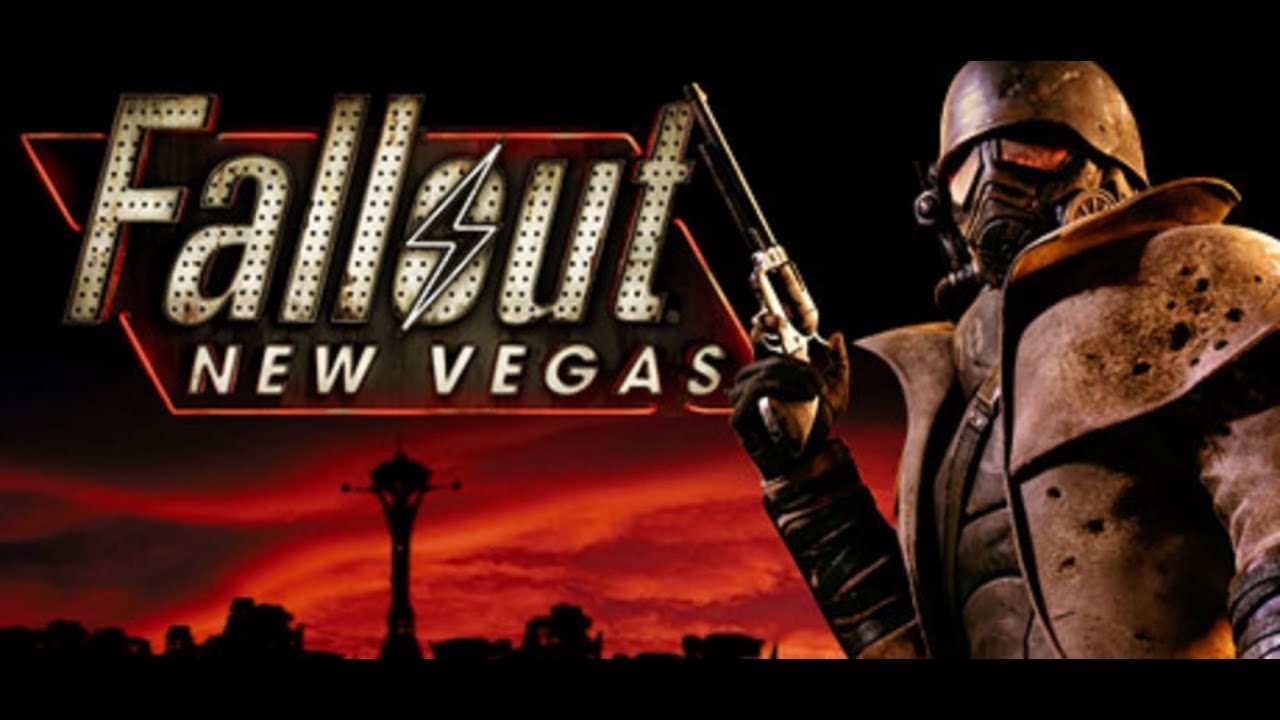 |
| Welcome to New Vegas! It's buggy as hell, but you (hopefully) won't mind. |
More importantly4, these factions all feel like they exist when the character's off-screen. Too many entities in fiction feel like they're defined in terms of the protagonist. And while there's nothing wrong with that, too often it leaves a cardboard cut-out feel to the world. Not so in New Vegas, where every settlement has a visible water supply that could feasibly sustain the population. Sure, everybody wants you to do stuff - you're still the protagonist, and that means results - but very little feels like it couldn't exist without you.
If that means I occasionally crash my system, I can live with that.
 In Tyranny, there are two primary risks being taken (at least to my eyes):
- The setting. When you have a tagline like "Sometimes, Evil Wins5," you're setting expectations. The protagonist is in the employ of a conquering overlord, and brutal subjugation seems to be the order of the day. Not your typical RPG fare.
- Reactivity. The game gives multiple options for who to ally with or betray, and it plays out rather differently based on those choices. I missed out on an entire section in my first playthrough, and that's par for the course, as far as I can tell. It's not so much one plot, as four or five
So. Challenges! Did they pay off? Ultimately, I'd have to say yes; though the game has its challenges, I found it a rewarding experience. Ironically, I'd say that its two biggest risks didn't quite pay off - after an amazing prologue where you conquer a province during character creation, the game felt a little too much like other isometric RPGs for my tastes; the setting whetted my appetite for something truly different, but it ultimately felt too similar to its peers to me. In addition, the reactivity - attempting to model the dynamic nature of a good tabletop RPG - felt like it came at the cost of depth. I could be in the minority here, but I kind of wish they'd spent more time on polishing what was there, rather than creating different paths.
Having said that, I really like the game. The setting does a great job of priming the player for difficult choices with no good answer. Once those expectations are set, it does a lovely job of delivering on that particular promise.
Takeaways
But this isn't a review blog; we're here for hot RPG & fiction tips, and pictures of chinchillas. Let's get one out of the way right now.
 |
| Hello, friend! |
On the story-crafting side, there are some strong takeaways too.
KOTOR II inspires me to examine the actions my protagonists take, and to consider their effect on the larger world. Also, to consider the effect that charismatic, magnetic individuals have on those around them, and to really challenge the Calvinistic notions of destiny prominent in so much fantasy literature.
FO:NV inspires me to consider what the world looks like when my heroes aren't interacting with it. Do my antagonists exist except as foils for the protagonists? What if the heroes never crossed their path - what would they be doing? Also, to consider how my cities are getting enough to eat and drink - this stuff matters, and ignoring it can be a huge blow to immersion.
Tyranny inspires me to consider the context in which a character's actions and decisions occur. Expectation violation is a huge letdown for an audience, so properly calibrating for any tough choices ahead is probably wise. Also, admittedly, remembering to focus on what is occurring, rather than what could be.
The media we consume shapes what we create. I sometimes find it useful to examine why I enjoy the things I do, and see what I can learn from them. With any luck, you've found it (at least a little) useful too!
Be excellent to each other.
~Killstring
* * *
1 - There's a longer discussion to be had on this topic; contrasting passive entertainment - defined as something that requires no participation from the user, such as a film; and active entertainment - something that requires some degree of participation from the user, whether that be envisioning the text when reading a book, providing input and control when playing a video game, or contributing in whole to the end result, as in playing an RPG.
I prefer active, and consider RPGs to be the most active form of entertainment that's readily available to most people. The required investment is higher, but when it's working well, there really isn't anything that can compare.
2 - Chris Avellone, who is someone I shall say little about, lest I reveal myself as a swooning fanboy. Let's just say that he is very good at his job, and someone I am routinely inspired by.
3 - I could be misremembering this - it's been a long time since I played The Sith Lords, so it's possible I'm conflating two events into one. Either way, the concept holds. Also, if you're a huge nerd like me, you correctly identified that the power is called Influence. Hi, fellow nerd! Did we just become great friends?
4 - To me, anyway.
5 - This game came out in November of 2016. I passed on it at the time, as it was a little too on-the-nose for me, given American politics at the time. Which is a shame; it's a flawed, but lovely, gem.


