Showing posts with label Review. Show all posts

Thursday, June 15, 2017

Somewhat-orthodox inspiration: risk in game design


It's no secret; I play a lot of video games. Something about the medium clicks for me in way that watching tv or movies never really has1. I also adore taking inspiration from digital games, and putting them in analog ones; whether that be in published writing, or in adapting an existing game's story or themes as a GM, it's one of my favorite go-to techniques.

So yeah. Games.

In trying to figure out my preferences, I came across an interesting realization; namely, a strong preference for risky games. Now, I don't mean risque, or niche necessarily, but rather games that try something new, different, innovative. More often than not, I'm happier with a game that tries a lot of interesting things, fails at a bunch of them, and ships buggy as hell, than I am with a competently - even excellently - executed version of something rote, or routine.

I like risks. Unsurprisingly, I really like Obsidian.

They make video games! Not out of actual obsidian, as far as I can tell; that'd be dangerous. Completely rad, though.

Big Risks, Big Bugs, Big Deal

I want to focus on three of Obsidian's games; KOTOR II, Fallout: New Vegas, and Tyranny. 

I love these games. They're both clearly follow-ups to, yet remarkably different than their predecessors (KOTOR, Fallout 3 - or Fallouts 1 & 2, if you prefer - and Pillars of Eternity, respectively), and I find that I love them for different reasons. 

KOTOR II was, by most accounts, a disappointment when compared to the first. Honestly, that's no failing; as a sequel to what's become an all-time classic video game RPG, clearing that bar was always going to be an uphill battle, but doing so on a rushed timeline was a recipe for disaster.

But what a beautiful, messy disaster it was. 
Darth Spooky

A Star Wars game written by a dude2  who admittedly hated The Force - or at least, the concept of destiny, of predestination baked in - wrote a thoughtful narrative about destiny, and what it means to embrace or reject it. It actively, and unabashedly challenged the notions that Jedi are, in fact, good people. Early in the game, there's a scene where the main character uses a Jedi Mind Trick3 on an NPC, and your companion, Kreia, illustrates how that could have unforeseen consequences down the line. It's a compelling challenge, not only to the assumptions of the Star Wars universe, but how players behave in RPGs, digital or otherwise. There tends to be an assumption that protagonists are good, so what they do is good - especially if their intentions are likewise good.

And while we might like that to be the case, it really isn't.

Mind-Control is, admittedly, one of the most terrifying powers I can think of; having it applied to me would not only make me do something I might not want to, but entirely dismisses my existence as a person - stripped of personal agency, I become a thing, to be manipulated as someone else sees fit.

Objectively speaking, the Influence power is the most evil thing a Jedi can do - at least you could use Force Lighting to spot-weld.

The first KOTOR was a brilliant game that made me fall in love with Star Wars all over again, But KOTOR II made me genuinely examine the actions of my heroes - both those I watched on the screen, and those I wrote or portrayed - and genuinely question their actions and morality.

I'll take a lot of bugs, if that's what it gets me.
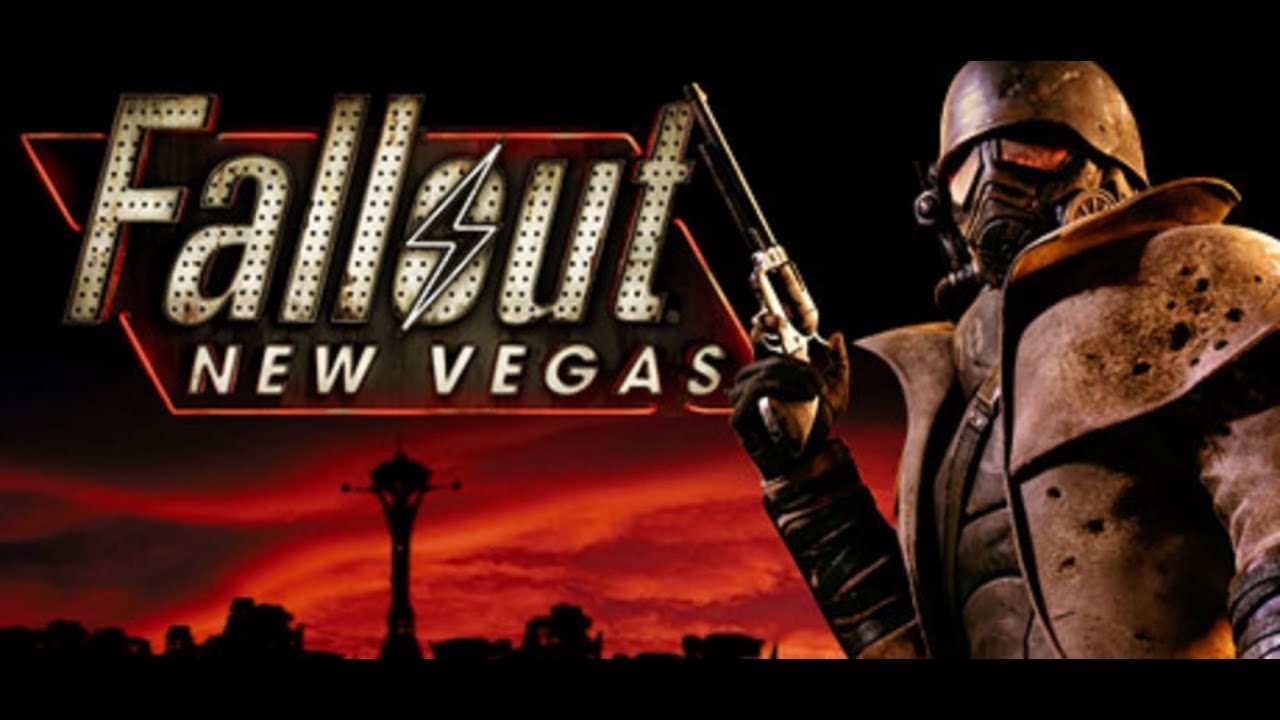
Welcome to New Vegas! It's buggy as hell, but you (hopefully) won't mind.
In a similar vein, Fallout: New Vegas stood on the shoulders of a buggy game (Fallout 3), and went farther. And while, yeah, sometimes a mutant rat-thing would get stuck inside the terrain, but in addition to gameplay improvements, and a myriad of interesting quests, the thing that really stood out to me, was the degree of reactivity. There are several factions in the game - two big ones (three if you count Mr. House), and a smattering of minor players - and they genuinely feel like groups that could exist, that people would actually be a part of.

More importantly4, these factions all feel like they exist when the character's off-screen. Too many entities in fiction feel like they're defined in terms of the protagonist. And while there's nothing wrong with that, too often it leaves a cardboard cut-out feel to the world. Not so in New Vegas, where every settlement has a visible water supply that could feasibly sustain the population. Sure, everybody wants you to do stuff - you're still the protagonist, and that means results - but very little feels like it couldn't exist without you.

If that means I occasionally crash my system, I can live with that.

In Tyranny, there are two primary risks being taken (at least to my eyes):

  1. The setting. When you have a tagline like "Sometimes, Evil Wins5," you're setting expectations. The protagonist is in the employ of a conquering overlord, and brutal subjugation seems to be the order of the day. Not your typical RPG fare.
  2. Reactivity. The game gives multiple options for who to ally with or betray, and it plays out rather differently based on those choices. I missed out on an entire section in my first playthrough, and that's par for the course, as far as I can tell. It's not so much one plot, as four or five
So. Challenges! Did they pay off? Ultimately, I'd have to say yes; though the game has its challenges, I found it a rewarding experience. Ironically, I'd say that its two biggest risks didn't quite pay off - after an amazing prologue where you conquer a province during character creation, the game felt a little too much like other isometric RPGs for my tastes; the setting whetted my appetite for something truly different, but it ultimately felt too similar to its peers to me. In addition, the reactivity - attempting to model the dynamic nature of a good tabletop RPG - felt like it came at the cost of depth. I could be in the minority here, but I kind of wish they'd spent more time on polishing what was there, rather than creating different paths.

Having said that, I really like the game. The setting does a great job of priming the player for difficult choices with no good answer. Once those expectations are set, it does a lovely job of delivering on that particular promise.

Takeaways

But this isn't a review blog; we're here for hot RPG & fiction tips, and pictures of chinchillas. Let's get one out of the way right now.
Hello, friend!

On the story-crafting side, there are some strong takeaways too.

KOTOR II inspires me to examine the actions my protagonists take, and to consider their effect on the larger world. Also, to consider the effect that charismatic, magnetic individuals have on those around them, and to really challenge the Calvinistic notions of destiny prominent in so much fantasy literature.

FO:NV inspires me to consider what the world looks like when my heroes aren't interacting with it. Do my antagonists exist except as foils for the protagonists? What if the heroes never crossed their path - what would they be doing? Also, to consider how my cities are getting enough to eat and drink - this stuff matters, and ignoring it can be a huge blow to immersion.

Tyranny inspires me to consider the context in which a character's actions and decisions occur. Expectation violation is a huge letdown for an audience, so properly calibrating for any tough choices ahead is probably wise. Also, admittedly, remembering to focus on what is occurring, rather than what could be.

The media we consume shapes what we create. I sometimes find it useful to examine why I enjoy the things I do, and see what I can learn from them. With any luck, you've found it (at least a little) useful too!

Be excellent to each other.
~Killstring

* * *

1 - There's a longer discussion to be had on this topic; contrasting passive entertainment - defined as something that requires no participation from the user, such as a film; and active entertainment - something that requires some degree of participation from the user, whether that be envisioning the text when reading a book, providing input and control when playing a video game, or contributing in whole to the end result, as in playing an RPG. 

I prefer active, and consider RPGs to be the most active form of entertainment that's readily available to most people. The required investment is higher, but when it's working well, there really isn't anything that can compare.

2 - Chris Avellone, who is someone I shall say little about, lest I reveal myself as a swooning fanboy. Let's just say that he is very good at his job, and someone I am routinely inspired by.

3 - I could be misremembering this - it's been a long time since I played The Sith Lords, so it's possible I'm conflating two events into one. Either way, the concept holds. Also, if you're a huge nerd like me, you correctly identified that the power is called Influence. Hi, fellow nerd! Did we just become great friends?

4 - To me, anyway.

5 - This game came out in November of 2016. I passed on it at the time, as it was a little too on-the-nose for me, given American politics at the time. Which is a shame; it's a flawed, but lovely, gem. 

Saturday, December 17, 2016

Tom Clancy's The Division - can I stomach this game?

Note: this isn't really a "review" in the traditional sense; more of a deconstruction of content and themes. I don't know what it says that of the dozen or so half-started posts since my hiatus, that this is the one that came together, but here it is.


So, The Division.

Here is a game that I really wanted to like. Before its release, I watched cool live-action parkour videos, promising a gritty-but-human action romp in a mid-apocalyptic New York. Upon release, however, the game showed itself to be rife with issues; and I don't mean the gameplay (though I understand that it was spotty at launch).

No, I mean the ethically troubling picture of lethally ensuring an authoritarian agenda, primarily by means of killing black dudes in hoodies.

What I wanted was a third-person shooter, focused on sweet spec ops homies sticking up for the common folk in a zombie-free apocalypse. And true or not, what seemed to be delivered was a weirdly totalitarian romp, where murdering large quantities of brown-skinned young men - often for doing the exact same things you would then go on to do - was the basic structure, message, and point of the game. Whether that was the developers' intent or not doesn't really matter, if that's the end result.

Maybe it's me. But I don't think it's just me.

I could be described as a bleeding-heart liberal, and I wouldn't exactly take offense to that. So when a friend of mine (who happens to be a literally card-carrying1 NRA member) tells me to stay away from a game due to its horrifically tone-deaf handling of gun violence, I pay attention. As a result, The Division hasn't gotten the time of day from me, let alone any of my money.

Time passed. A Steam Free Weekend rolled around. And I found myself wondering: is it actually that bad? I know there have been many patches, response to a lot of feedback. Have these issues been addressed? Were they as strong as they first appeared, or was that a knee-jerk reaction? Ultimately, How would I feel, playing this game?

I could find out for myself. So I dove in.

Right of the bat, I wondered if a different point-of-view character would alter the problematic tone of the content? I set my language to French (with English subtitles, I don't speak the language), and venture forth as a ruggedly handsome dark-skinned dude, having been suitably impressed with the character creation result, despite limited options. This man is here from Actual France to help American civilians in their time of need, and he's gonna look sweet AF while doing so.

Deal With It.
J'Killstring is unimpressed with your corporate inspiration poster
So I head out! I meet up with my fellow Domestic Sleeper Agents2, and get briefed on what's going down. Some minor tutorial stuff later, and I'm off to locate some nasty profiteers who've commandeered some canned food.

Yes, canned food.

I actually rather like this. War profiteers are nasty, and subverting humanitarian relief for personal profit is a legit concern in warzones. I like that we're talking about this, seeing it in the US, and I really like that I get to do something about it. All told, I should be able to take out some profiteers without triggering a crisis of conscience.

So I roll up on a scene, where someone is shaking down their fellow man. I use these terms because they're both indistinctly bundled-up folks in hoodies, hats, and bandannas - I couldn't tell you their ethnicity, gender, or even basic facial features. What I could tell, however, was that one was threatening the other, talking about his nice watch, etc., while the other sobbed and begged not to die.

I can parse the morality of this, I thought.

I pop out of cover, and blast the bandit away. My character barely reacts to this at all, but as a Domestic Sleeper Agent, I suppose he's a little bit dead inside. Still, the almost-victim is not a scary Black Ops Ninja, so they run screaming from the scary dude with the gun.

Makes sense to me!

I follow up on some clues (looted from the body, I guess?) to find this ne'er-do-well's compatriots. I get a cover tutorial, and see some fellows in hoodies, marked in my HUD. Ok, I'm not going to just gun them down, right? Can I talk to them? Nope, no dialog options. Nor is there an option to holster my weapon. So ok, I walk out, trying to see what they're up to.
In the not-zombie apocalypse, I'm makin' sure you get your veggies!

They open fire, and I am very dead.

Still, it's a video game! I respawn not far from here (my brain filling in the narrative gap with an elaborate fiction about Le Division being AIs, or uploaded human consciousnesses, with spare host bodies all over the city), and briskly avenge my prior, ultimately meaningless death. I guess these guys are the culprits I was told about? I step into a nearby warehouse, hoping to find the food shipments.

And I do! Hooray - green beans for everyone. I am a nutritional hero.

I make my way out, and locals are looting the bodies of the fellows I gunned down earlier. I like that desperate, human touch, honestly - these folks want to survive - and some of them are spooked at my passing, but others pay me little mind. I hear a voice calling out from a window, encouraging me, telling me that I'm "doing great work," and they appreciate it. On one hand, I just gunned down three human beings. I notice that they are all young black men, and feel a certain way about that. On the other hand, they were war profiteers, oppressing the local populace, and generally being dicks.

Ultimately, I am reminded that this game is a shooter. I can really only interact with the world via my guns. With that said, the civilians around seem to think I'm doing good for them, which is about all I can ask from the game, given what it is. I pass a woman consoling her friend - he's distraught, and has despaired of life, mourning the death of what I presume is his significant other. She tries to encourage him, asking "what do you think he would want for you?" and so forth.

I know it's a little throwaway scene, meant to establish the setting. But I find myself genuinely touched by these two, their friendship, and the difficulty of going on without beloved husband/boyfriend/it's not actually my business. I want to comfort them too. Give them some supplies, or at least some encouragement.

But all I have is a gun. The only way I can interact with this world is destructive in nature.

I move on.

Having established J'Killstring's inherent French-ness, I switch the audio to English - there's just too much chatter that's not showing up on the subtitles - and am pleasantly surprised to hear that Garrus - or at least his voice actor - is one of my mission commander/talking head/radio support folk. I instantly feel better about the decisions being made; here's a guy who's weighed the brutal calculus of war, somebody I trust.

It's a silly sort of peripheral cue, but it adds to my enjoyment of the game, so I don't mind.

I bring up a menu to determine my next course of action; it seems that there's a hostage situation at the bank - once again, I'm pretty sure I can parse the morality of this, though it's potentially open to interpretation. I'll check it out! I crawl through a sewer tunnel to make it to the bank, cementing my firm belief that sewer access is essential for any good action protagonist, and make my way to the bank.


"Being an action hero does not smell the way I hoped it would."

And it's here that I run into my first real bit of trouble.

I am told that "hostiles are detected," and when I get close, I see three dark-skinned dudes, rifling through the pockets of a prone figure, mumbling about "slim pickings." They are highlighted in red. I'm supposed to shoot them.

Okay, but fuck that maybe? I literally just walked past dozens of people picking over corpses that I myself made. How is this bad behavior? How am I supposed to tell if they're different from the unarmed civilians I passed, doing the same exact thing? I walk out of cover, and am told it's "every man for himself," as they open fire. I guess my HUD-supplying, radio-broadcasting overlords know what's up, as these cats aren't happy to see me. Gameplay-wise, I have a better grip of things, and dispatch these fellas with relative ease.

I look over the bodies. It's a pile of young, black men, gunned down in NYC. A young, black man, with a smoking military rifle stands over them, a grim look of determination on his face.

I do not feel like a hero.

I make my way inside, where the hostages are. It's two dudes locked in a comfortable-looking office, not in any immediate danger. Either way, they're safe now, and I'm off to recover some stolen morphine. Medical supplies, right. Okay. This is probably okay.

SPOILER ALERT: It's not particularly okay.

I make it there, and my magic heads-up-display informs me who is bad - but these guys seem to be a fairly mixed bag. One of them is looking for an antivirus, which seems to be an incredibly reasonable response to their situation, given the horrible death plague, and the complete failure of legitimate channels to help the population and whatnot. They're surprised to find the Morphine I'm here for, and while one of them (acutely) notes that they could die at any moment, and suggests they do so high, the other is just trying to get some damn medicine. I know it won't work, but I pop out, hoping for a dialog box.

Nope! Just bullets.

I die. A lot. My backup arrives, shouting out that we have to take out "these scavengers." I feel like crap - we're all scavengers here, right? It's a zombie-free apocalypse. I fire, and fire, and eventually triumph, but I'm having a hard time feeling triumphant. In the distance, I hear barking dogs, and gunfire. I look over the pile of bodies. They are, to a soul, young, black men in hoodies and bandannas. They seem to have sad, perplexed looks on their faces, an eternally twisted death grimace that seems to ask "why?"

And I don't have a good answer at the ready.

I don't feel like a hero.

His eyes have questions.


I don't have answers.

I am told that HQ is "grateful for all the lives (I've) saved," which feels massively incongruous, considering the pile of bodies I'm currently surveying. But hey. Medical supplies. I head back to HQ, where I am given a pep talk by my commander - a Brooklyn native, it seems - who tells me how much my actions mean to them. I am repeatedly told about all the good that my actions are doing, that I'm saving lives and making a difference. That I am a good person, doing important things.

I have killed at least a dozen people - all young, black men - in the past 45 minutes or so, and it was not exactly black-and-white. There is something bristlingly tone-deaf about my superior officer - a mild-voiced white man - telling me about all the good that I've done here, having killed so many brown-skinned dudes in New York, and how this makes him feel better.

Stand firm in the confidence that your actions are just. You are saving lives, doing good. You are a hero. And if that feels dissonant with your actions, just remember that we are the good guys, they are the bad guys, and that is what matters.

My experience is oddly similar to playing Spec Ops: The Line. My stomach turns a little.

I have another mission, to help a police station that is under attack. Every enemy is another young black man. My allies tend to be middle-aged white men, though I admittedly don't get a good look at them. I am given encouragement, told that my enemies have "no strategy," and it's starting to feel more than a little hollow, considering how badly they're beating the cops before (and admittedly, after) I show up. They are called "cowards," as they charge with baseball bats at people packing military hardware. I find it difficult not to attach the weight of prejudice to my comrade's words. I find it significantly more difficult to believe that all these young black dudes are attacking the NYPD without sufficient cause. It's the NYPD, it's not like there's no history there.

I idly wonder if I can align with the rioters.

***

I walk away from the computer, do something else for a while, and reflect upon my experience.

The gameplay was good - quite good, actually. There's a particular sort of third-person shooter itch that is really getting scratched by the smooth cover system, and importance of tactical positioning in these firefights. There is promise here - my character has an appearance slot for scarves. For scarves! I'm something of an aficionado - scarves, wraps, kerchiefs, bandannas - so this by itself should be enough for a Game of the Year nod from me.

And yet.

I find myself more troubled by my actions in the game as time passes. I wonder if that will pass with experience, if I'll stop noticing. I wonder if I'll feel better if that happens, or worse. I seriously debate whether or not I want to fire the game back up, and see if it gets any better.

But ultimately, I want to do something that's fun. And despite the enticing gameplay3, that really doesn't describe my experience with The Division in my first hour or so. Yet I feel compelled to give it one more chance, if for no other reason than to see if there are enemies that aren't young black men in hoodies.

Make of that what you will.

~Killstring

* * *

1 - It's not a metaphor - they have actual cards! Despite having a well-developed - and I should think not unreasonable - fear of firearms in general, and a massive distaste for the NRA as an organization, I found the card to be a classy touch.

2 - Seriously, is no one else creeped out by this? Straight outta Cold War Fiction, The Division is made up of Hardcore Spec Ops Death Machines, embedded in various places around major cities? Sleeper agents, ready to go to town on the population at the blinking of a (really cool) watch? 

Am I alone in finding this odd? 

3 - Which I understand is a relatively new development! But it's worth mentioning - the game feels really pleasant to control, the city is lovingly rendered, and interacting with the environment is delightful. The shooting is ok, but that's actually less important to me in my third-person shooters, if that makes sense? 

It's all about navigating the environment for me. The gunplay is what gives my cover meaning.


...

This might be strange. I accept that.