Showing posts with label Communication. Show all posts

Friday, August 25, 2017

The Biggest Mistake Indie Artists Keep Making

How's that for a clickbait title? Completing the series discussed here, and really hammering home something that made my life harder than it had to be in my old career.

You’re a smart artist. You’re savvy to social media, promotional techniques, and how to carry yourself like a star. Most importantly, your craft is on point; people want to see you perform, promoters want to book you, and everybody wants to buy your merch.

Awesome.

How hard are you making it for them?

Full-Contact Promotion

Let’s say that I’m a concert promoter, and I want to book you for a show. How do I get in contact with you? DMs on Twitter? Facebook Messenger? Leaving a comment on your Instagram?

Because if that’s the answer, you’re missing out. Friend of the Blog1 Jonathan Killstring had this to say:

“Back when I was a concert promoter, I was the crazy young kid, because I’d actually talk to people through MySpace, which was the big platform at the time. Even then, I preferred to do everything in email. Booking agents, other promoters, tour managers – everybody used email. Back then we had Blackberries, today it’s smartphones, but it’s the same thing; a contact email for the band — one that people actually check — is what people in the business are looking for.”

If you’re not making it easy for people to contact you, you’re making it hard.

Don’t make it hard.

Centralize

Make an email address. One Email Address. YouOfficial at Gmail dot com is probably available, so stop reading and go register the address. We’ll wait.

You back? Awesome.

Once you’ve established your primary contact email, use it for everything. Talking to a promoter? Official address. Ordering Merch? Official address. Setting up an interview with a college newspaper? Ordering CDs? Purchasing online promotion?

You get the idea.

Make it Easy

Using your primary email for everything means that it’ll be in your contacts’ address books, making it easier for them to reach out to you in the future. Still, there’s no substitute for making that easy in the first place.

Plaster this thing. Your website, Twitter, Instagram, YouTube – if someone’s looking at a site affiliated with your band, they should be able to find your contact info. Don’t hide it under paragraphs about your influences – put that ish right up top.

People trying to contact acts aren’t looking to waste time checking messages across platforms, and if it’s not easy to get a hold of you, they’ll find someone who makes it easy. Basically,  the more effort someone has to go through to contact you, the more likely it is you’re missing out on gigs, press coverage, and other opportunities. Heck, you’re probably missing out on concert attendance and album sales.

Don’t make it complicated. Have a dedicated “contact us” section with your email.

The Ball’s in Your Court — Don’t Drop It

This should go without saying, but we’ll say it anyway; if someone gets in contact with you, for the love of all that’s holy, don’t leave them hanging. Get back to people within 24 hours, even if it’s just to say “I’m thinking about it.”

Make life easy for industry professionals, and they'll happily return the favor. Make life harder for them, and they'll be more likely to find someone who won't. 

* * *

1 - At this point, I was pretty sure they weren't going to pay me, and it was starting to show. It is possible that I am no longer a friend of the blog. /kanyeshrug 


Saturday, December 17, 2016

Tom Clancy's The Division - can I stomach this game?

Note: this isn't really a "review" in the traditional sense; more of a deconstruction of content and themes. I don't know what it says that of the dozen or so half-started posts since my hiatus, that this is the one that came together, but here it is.


So, The Division.

Here is a game that I really wanted to like. Before its release, I watched cool live-action parkour videos, promising a gritty-but-human action romp in a mid-apocalyptic New York. Upon release, however, the game showed itself to be rife with issues; and I don't mean the gameplay (though I understand that it was spotty at launch).

No, I mean the ethically troubling picture of lethally ensuring an authoritarian agenda, primarily by means of killing black dudes in hoodies.

What I wanted was a third-person shooter, focused on sweet spec ops homies sticking up for the common folk in a zombie-free apocalypse. And true or not, what seemed to be delivered was a weirdly totalitarian romp, where murdering large quantities of brown-skinned young men - often for doing the exact same things you would then go on to do - was the basic structure, message, and point of the game. Whether that was the developers' intent or not doesn't really matter, if that's the end result.

Maybe it's me. But I don't think it's just me.

I could be described as a bleeding-heart liberal, and I wouldn't exactly take offense to that. So when a friend of mine (who happens to be a literally card-carrying1 NRA member) tells me to stay away from a game due to its horrifically tone-deaf handling of gun violence, I pay attention. As a result, The Division hasn't gotten the time of day from me, let alone any of my money.

Time passed. A Steam Free Weekend rolled around. And I found myself wondering: is it actually that bad? I know there have been many patches, response to a lot of feedback. Have these issues been addressed? Were they as strong as they first appeared, or was that a knee-jerk reaction? Ultimately, How would I feel, playing this game?

I could find out for myself. So I dove in.

Right of the bat, I wondered if a different point-of-view character would alter the problematic tone of the content? I set my language to French (with English subtitles, I don't speak the language), and venture forth as a ruggedly handsome dark-skinned dude, having been suitably impressed with the character creation result, despite limited options. This man is here from Actual France to help American civilians in their time of need, and he's gonna look sweet AF while doing so.

Deal With It.
J'Killstring is unimpressed with your corporate inspiration poster
So I head out! I meet up with my fellow Domestic Sleeper Agents2, and get briefed on what's going down. Some minor tutorial stuff later, and I'm off to locate some nasty profiteers who've commandeered some canned food.

Yes, canned food.

I actually rather like this. War profiteers are nasty, and subverting humanitarian relief for personal profit is a legit concern in warzones. I like that we're talking about this, seeing it in the US, and I really like that I get to do something about it. All told, I should be able to take out some profiteers without triggering a crisis of conscience.

So I roll up on a scene, where someone is shaking down their fellow man. I use these terms because they're both indistinctly bundled-up folks in hoodies, hats, and bandannas - I couldn't tell you their ethnicity, gender, or even basic facial features. What I could tell, however, was that one was threatening the other, talking about his nice watch, etc., while the other sobbed and begged not to die.

I can parse the morality of this, I thought.

I pop out of cover, and blast the bandit away. My character barely reacts to this at all, but as a Domestic Sleeper Agent, I suppose he's a little bit dead inside. Still, the almost-victim is not a scary Black Ops Ninja, so they run screaming from the scary dude with the gun.

Makes sense to me!

I follow up on some clues (looted from the body, I guess?) to find this ne'er-do-well's compatriots. I get a cover tutorial, and see some fellows in hoodies, marked in my HUD. Ok, I'm not going to just gun them down, right? Can I talk to them? Nope, no dialog options. Nor is there an option to holster my weapon. So ok, I walk out, trying to see what they're up to.
In the not-zombie apocalypse, I'm makin' sure you get your veggies!

They open fire, and I am very dead.

Still, it's a video game! I respawn not far from here (my brain filling in the narrative gap with an elaborate fiction about Le Division being AIs, or uploaded human consciousnesses, with spare host bodies all over the city), and briskly avenge my prior, ultimately meaningless death. I guess these guys are the culprits I was told about? I step into a nearby warehouse, hoping to find the food shipments.

And I do! Hooray - green beans for everyone. I am a nutritional hero.

I make my way out, and locals are looting the bodies of the fellows I gunned down earlier. I like that desperate, human touch, honestly - these folks want to survive - and some of them are spooked at my passing, but others pay me little mind. I hear a voice calling out from a window, encouraging me, telling me that I'm "doing great work," and they appreciate it. On one hand, I just gunned down three human beings. I notice that they are all young black men, and feel a certain way about that. On the other hand, they were war profiteers, oppressing the local populace, and generally being dicks.

Ultimately, I am reminded that this game is a shooter. I can really only interact with the world via my guns. With that said, the civilians around seem to think I'm doing good for them, which is about all I can ask from the game, given what it is. I pass a woman consoling her friend - he's distraught, and has despaired of life, mourning the death of what I presume is his significant other. She tries to encourage him, asking "what do you think he would want for you?" and so forth.

I know it's a little throwaway scene, meant to establish the setting. But I find myself genuinely touched by these two, their friendship, and the difficulty of going on without beloved husband/boyfriend/it's not actually my business. I want to comfort them too. Give them some supplies, or at least some encouragement.

But all I have is a gun. The only way I can interact with this world is destructive in nature.

I move on.

Having established J'Killstring's inherent French-ness, I switch the audio to English - there's just too much chatter that's not showing up on the subtitles - and am pleasantly surprised to hear that Garrus - or at least his voice actor - is one of my mission commander/talking head/radio support folk. I instantly feel better about the decisions being made; here's a guy who's weighed the brutal calculus of war, somebody I trust.

It's a silly sort of peripheral cue, but it adds to my enjoyment of the game, so I don't mind.

I bring up a menu to determine my next course of action; it seems that there's a hostage situation at the bank - once again, I'm pretty sure I can parse the morality of this, though it's potentially open to interpretation. I'll check it out! I crawl through a sewer tunnel to make it to the bank, cementing my firm belief that sewer access is essential for any good action protagonist, and make my way to the bank.


"Being an action hero does not smell the way I hoped it would."

And it's here that I run into my first real bit of trouble.

I am told that "hostiles are detected," and when I get close, I see three dark-skinned dudes, rifling through the pockets of a prone figure, mumbling about "slim pickings." They are highlighted in red. I'm supposed to shoot them.

Okay, but fuck that maybe? I literally just walked past dozens of people picking over corpses that I myself made. How is this bad behavior? How am I supposed to tell if they're different from the unarmed civilians I passed, doing the same exact thing? I walk out of cover, and am told it's "every man for himself," as they open fire. I guess my HUD-supplying, radio-broadcasting overlords know what's up, as these cats aren't happy to see me. Gameplay-wise, I have a better grip of things, and dispatch these fellas with relative ease.

I look over the bodies. It's a pile of young, black men, gunned down in NYC. A young, black man, with a smoking military rifle stands over them, a grim look of determination on his face.

I do not feel like a hero.

I make my way inside, where the hostages are. It's two dudes locked in a comfortable-looking office, not in any immediate danger. Either way, they're safe now, and I'm off to recover some stolen morphine. Medical supplies, right. Okay. This is probably okay.

SPOILER ALERT: It's not particularly okay.

I make it there, and my magic heads-up-display informs me who is bad - but these guys seem to be a fairly mixed bag. One of them is looking for an antivirus, which seems to be an incredibly reasonable response to their situation, given the horrible death plague, and the complete failure of legitimate channels to help the population and whatnot. They're surprised to find the Morphine I'm here for, and while one of them (acutely) notes that they could die at any moment, and suggests they do so high, the other is just trying to get some damn medicine. I know it won't work, but I pop out, hoping for a dialog box.

Nope! Just bullets.

I die. A lot. My backup arrives, shouting out that we have to take out "these scavengers." I feel like crap - we're all scavengers here, right? It's a zombie-free apocalypse. I fire, and fire, and eventually triumph, but I'm having a hard time feeling triumphant. In the distance, I hear barking dogs, and gunfire. I look over the pile of bodies. They are, to a soul, young, black men in hoodies and bandannas. They seem to have sad, perplexed looks on their faces, an eternally twisted death grimace that seems to ask "why?"

And I don't have a good answer at the ready.

I don't feel like a hero.

His eyes have questions.


I don't have answers.

I am told that HQ is "grateful for all the lives (I've) saved," which feels massively incongruous, considering the pile of bodies I'm currently surveying. But hey. Medical supplies. I head back to HQ, where I am given a pep talk by my commander - a Brooklyn native, it seems - who tells me how much my actions mean to them. I am repeatedly told about all the good that my actions are doing, that I'm saving lives and making a difference. That I am a good person, doing important things.

I have killed at least a dozen people - all young, black men - in the past 45 minutes or so, and it was not exactly black-and-white. There is something bristlingly tone-deaf about my superior officer - a mild-voiced white man - telling me about all the good that I've done here, having killed so many brown-skinned dudes in New York, and how this makes him feel better.

Stand firm in the confidence that your actions are just. You are saving lives, doing good. You are a hero. And if that feels dissonant with your actions, just remember that we are the good guys, they are the bad guys, and that is what matters.

My experience is oddly similar to playing Spec Ops: The Line. My stomach turns a little.

I have another mission, to help a police station that is under attack. Every enemy is another young black man. My allies tend to be middle-aged white men, though I admittedly don't get a good look at them. I am given encouragement, told that my enemies have "no strategy," and it's starting to feel more than a little hollow, considering how badly they're beating the cops before (and admittedly, after) I show up. They are called "cowards," as they charge with baseball bats at people packing military hardware. I find it difficult not to attach the weight of prejudice to my comrade's words. I find it significantly more difficult to believe that all these young black dudes are attacking the NYPD without sufficient cause. It's the NYPD, it's not like there's no history there.

I idly wonder if I can align with the rioters.

***

I walk away from the computer, do something else for a while, and reflect upon my experience.

The gameplay was good - quite good, actually. There's a particular sort of third-person shooter itch that is really getting scratched by the smooth cover system, and importance of tactical positioning in these firefights. There is promise here - my character has an appearance slot for scarves. For scarves! I'm something of an aficionado - scarves, wraps, kerchiefs, bandannas - so this by itself should be enough for a Game of the Year nod from me.

And yet.

I find myself more troubled by my actions in the game as time passes. I wonder if that will pass with experience, if I'll stop noticing. I wonder if I'll feel better if that happens, or worse. I seriously debate whether or not I want to fire the game back up, and see if it gets any better.

But ultimately, I want to do something that's fun. And despite the enticing gameplay3, that really doesn't describe my experience with The Division in my first hour or so. Yet I feel compelled to give it one more chance, if for no other reason than to see if there are enemies that aren't young black men in hoodies.

Make of that what you will.

~Killstring

* * *

1 - It's not a metaphor - they have actual cards! Despite having a well-developed - and I should think not unreasonable - fear of firearms in general, and a massive distaste for the NRA as an organization, I found the card to be a classy touch.

2 - Seriously, is no one else creeped out by this? Straight outta Cold War Fiction, The Division is made up of Hardcore Spec Ops Death Machines, embedded in various places around major cities? Sleeper agents, ready to go to town on the population at the blinking of a (really cool) watch? 

Am I alone in finding this odd? 

3 - Which I understand is a relatively new development! But it's worth mentioning - the game feels really pleasant to control, the city is lovingly rendered, and interacting with the environment is delightful. The shooting is ok, but that's actually less important to me in my third-person shooters, if that makes sense? 

It's all about navigating the environment for me. The gunplay is what gives my cover meaning.


...

This might be strange. I accept that.


Tuesday, October 4, 2016

The Player's Guide: how to win at RPGS!

If that's not the clickbait-iest title I've ever thrown out, I'm not sure what is.

But with all the GM-facing advice that exists, I feel there's plenty of room for more player-focused content in the RPG blogosphere. Having said that, I'm going to break the biggest rule of clickbaiting, and answer the question right off the bat. As a player, how do you win at RPGs? By participating in, and contributing to, an enjoyable experience.

Thanks for coming!

Best Post Ever!
Still here? Dang, guess I better elaborate then.

Some Elaboration

As I talked about back here, one of the distinctive ways that RPGs differ from their peers (to name a few; performing arts, entertainment media, and video games) is that the performer and the audience are the same person. This has a lot of effects, and it forms the cornerstone of the hobby. It provides an experience unlike any other, but it also presents fairly unique challenges for all involved.

So let's talk about that some more.

Ok, so I'm some kind of performer. What do I perform?

Actors get scripts. Improv is its own, incredibly difficult, beast. It's also a lot of fun, especially when it's going well. Ever read a novel to lose yourself in a character? Well, here's an opportunity to really get that experience. 

Now for the downside. You're performing without a net -- if something falls flat, it falls flat, and everyone will know it -- and the temptation to be funny, clever, memorable or dramatic can be overwhelming. Likewise, it's easy to get into a feedback loop of "my character would/would not do x," that begs the question why said character is a part of this story in the first place1.

But regardless of your preferred play style, there's two main components that go into being a player; and that's Enjoying Yourself, and Helping Others to Enjoy Themselves. Simple, right? If only. There's a lot that goes into both of those, but ultimately this forms the foundation of what we're doing in the hobby. I mean, if it's not fun, why are we doing it?

Now, that doesn't mean that everything has to be super-happy all the time; Game of Thrones would not necessarily be improved by Monte Python jokes. Having said that, if that's what everybody wants, then do that, that's fine. What might be disruptive in one game can be a major asset in another. But to do that, you first have to know what kind of game you're in.

How do we do that, you ask?

Mindfulness

Pretty sure talking about mindfulness requires HD photos
Or maybe this is just a kickass RPG location! Either way, we're good.
Now, I'm not trying to go all corporate-meditation-buzzword on you here, but check it out. A lot of ink -- digital and otherwise -- has been spilled about mindfulness, and a lot of it is worth checking out. Still, that's what google is for. For our purposes, when I'm talking about mindfulness, I mean the act of seeing things as they are, not as we want them to be, as well as acknowledging things outside ourselves as being real, and worthy of consideration. 

Basically, don't kid yourself, and remember that your friends matter too. 

Simple enough, though that doesn't make it easy to do. Still, if our goals are for everybody to have fun, it's not just about ourselves; we've got to take everybody on the ride with us. And whether it's the hilariously unexpected crackpot scheme, the incredibly unlikely combat encounter, or the deep, cutting, and memorable dramatic scene, that's how we get to those awesome, memorable experiences that get re-told for years to come. 

We get there together2. RPGs are a team sport, and even if characters and environment are antagonistic, it's all in service of those two goals. Which means that you can't get there without your fellow gamers.

You can't do it yourself.

The GM can't do it for you.

But guess what; if everybody's on the same page, then it doesn't matter if you're not the most entertaining, knowledgeable, experienced gamer in the world; all you have to do is contribute to team success.

#SQUADGOALS

So, what does everybody want to do? To figure that out, we've got to talk about it. There are some great tools for this -- Christopher Chinn's Same Page Tool is arguably the most popular, and for good reason -- but what's important is that we talk about the kind of game we want to have. 

As a brief aside: if this seems elementary; it's really not. There are a lot of subcultures in gaming, and one player's idea of what a game is/should be can be radically different than another's. Sometimes this can even lead to incompatibilities, where two folks just don't gel in a gaming sense, but in most cases, there's some middle ground to find. 

Think about it like starting a band, let's say a rock band. Ok, what's a rock band? If the drummer's thinking Rush, one guitarist is thinking Rage Against the Machine, while the other is thinking Goo Goo Dolls, the bassist thinks Metallica, and the singer's going for Bon Iver -- well, it's not to say it can't work out3, but it's going to take an awful lot of effort to get everybody on the same page. Even though they're all here to play rock music.

Same thing with RPGs. 

So with that in mind, even if you've decided on genre and game system, some conversations can go a long way. This is probably best done before the game starts, but it can certainly prove useful to in-progress games as well. 

Anyway, some things to talk about:
  • What kinds of scenes do people enjoy? This can include, but isn't limited to:
    • Combat
    • Planning
    • Unstructured roleplaying 
    • Structured roleplaying
    • Investigation
    • etc.
  • What tone(s) do people want to see in the game? You can have more than one!
    • Dramatic
    • Grounded
    • Whimsical
    • Comedic
    • Tragic
    • Horrifying
  • What role should mechanics play in the game?
  • How do we feel about character death, player absences, loot, etc.
And especially important once a game is underway:
  • What's working? What isn't? Do we have any idea why?
The point of this is not the questions, nor is it the answers. The most important aspect of this is, in my opinion, the introduction of ideas. There's some communication theory4 behind this, but the basic idea is that by talking about different ways to engage gaming, we introduce that concept, and get ourselves thinking about it.

This can be hard. Human beings tend to view their own experiences as absolute. There's nothing wrong with the instinct, but it's incomplete. I love snacking on jalapeno peppers -- to me, they're not that spicy -- and I flat-out can't do olives or goat cheese. But man, I'll forget that when recommending restaurants. 

Same thing with gaming preferences. We don't to question why we like something; most folks break it down into Fun v. Not Fun. Talking about it gets us to stretch our legs a little. So even if folks aren't the most forthcoming with feedback, that's fine; they should still be more likely to consider the context of other players than if we'd never had the discussion.

In Conclusion

There's a lot to unpack here -- there's at least a Part II, and if folks like these, plenty more -- but the big takeaway is pretty simple. 

RPGs are a team sport. By being mindful of our teammates, we'll have a much better chance of winning; that is to say, having a damn good time. 

You know. Winning.

All of you.

See you soon for Pt. II, where I'll ramble incoherently about making a character.

Much love,
~Killstring

* * *

1 - To be clear, I'm not attempting to disparage any particular playstyle here. For example, I have a more theatrical, narrative style - I can trend towards trying too hard - whereas my S/O has a very simulationist, single-point immersion-based style, and tends toward the latter problem.

Different styles bring different challenges, as well as different strengths. 

2 - Yeah, so maybe that's cheesy. still true. 

3 - If this band existed, I would almost certainly love them to death. I guess Dream Theatre gets kinda close sometimes?

4 - Short version; Priming and Agenda Setting go into how we interact with stuff that's been previously introduced (as opposed to new information,) and how the mass media isn't very good at telling us what to think, but is super good at telling us what to think about. For our purposes here, we want players and GMs thinking about not just what they like, but what the other folks in the group like. 

Friday, June 24, 2016

Creating a soundtrack for your RPG

Music is powerful. 

It's been a part of my life in many ways since I was young. I spent the better part of six years performing it, promoting it, eating1, breathing and sleeping it. During my first go-round in college - before taking those aforementioned six years - I was a theatre student, focused on sound design. I studied the impact that music can have on a dramatic scene, the way it could elevate a mood, increase tension, or accentuate tone. Especially in "black box" theatre, an awful lot is left up to the audience's imagination, and music is a great way to excite and enhance that.

I don't know if I was ever good as a sound designer. There was a lot of praise, and I worked on some award-nominated stuff, but it's not like I set the world on fire as a college student.

But!

I definitely tried to learn as much as I could. Live sound, studying pro audio at the Recording Workshop, and dozens of little projects here and there. I'd like to think that I picked some things up along the way.

Is it any wonder that as I became more and more involved with RPGs, that I'd try to apply what I'd learned?

Lovely album all the way 'round, and full of great "intro themes."

So, what are we doing here?

Soundtracking your RPG sessions can be a great way to enhance the experience for everyone. Not unlike live theatre or written fiction, there's a lot that your imagination needs to fill in to complete the scene. Visuals, emotions, physical posture - so much of what's going on in a scene can be intuited through a soundtrack.

It can also be a great big distraction if handled indelicately.

We're not going to delve too deeply into communication theory2, but there's some basic concepts that are important:

The Tone, or how the mood of music will inform the mood of the scene
The Association of a particular sound cue with some story element
The Practical Realities of adding additional sounds to a sound-based medium

These aren't scientific terms, just some things we should keep in mind.

Tone

This is what most people think of when we talk about soundtracks - the excellent use of musical score in Game of Thrones, or the Mass Effect games is a great example of this - emotional content underscored by appropriate music. Sad scenes can be punctuated by appropriately melancholic or sorrowful melodies, and a pulse-pounding action scene certainly benefits from a complimentary score.

Association

This requires some forethought, but linked elements can provide consistency. Instruments, composers, and specific songs can all form associations that you can use later. If a certain song plays when an antagonist is introduced, it can not only highlight elements of their character you want to emphasize, but can help accentuate those traits in later scenes.

Needless to say, you'll want to avoid anything that your table already has a strong association with. If everybody's played Mass Effect, don't use its most memorable songs in your soundtrack; that'll conjure up memories of the other property3 distracting from your game.

I tend to emphasize associations for situations rather than characters, as too much micro-managing while GMing leads to a disjointed experience. Speaking of!

Practical Realities

RPGs are a primarily auditory medium - information is conferred via the spoken word more than anything else. Music can be a powerful tool to fill in conceptual gaps, but it's also more noise; you want it to enhance your game, not distract your table. Some things to keep in mind:

First, volume levels. Ever step into a bar, and you can't hear your friends over the chatter and music? That's partially due to what we call a Sound Floor - basically, the ambient noise level you have to talk over in order to be heard. Your music should be loud enough to be audible, and to provide enjoyment in its own right, but not so loud that you need to talk over it. It's not a bad guideline to set it to a level that feels about right, then walk it back a little. You can always turn it up later.

Secondly, frequency. Not as in how often something happens, but rather the frequency it vibrates at. Human speech tends to hang out in the 150hz-500hz range, so you'll want to cut that by a couple decibels for gaming purposes. The idea is to carve out some sonic real estate for people's voices, give them room so they're not fighting with the score.

In other words, don't EQ your soundtrack to sound great by itself; it's a supporting actor, there to make the stars look good.
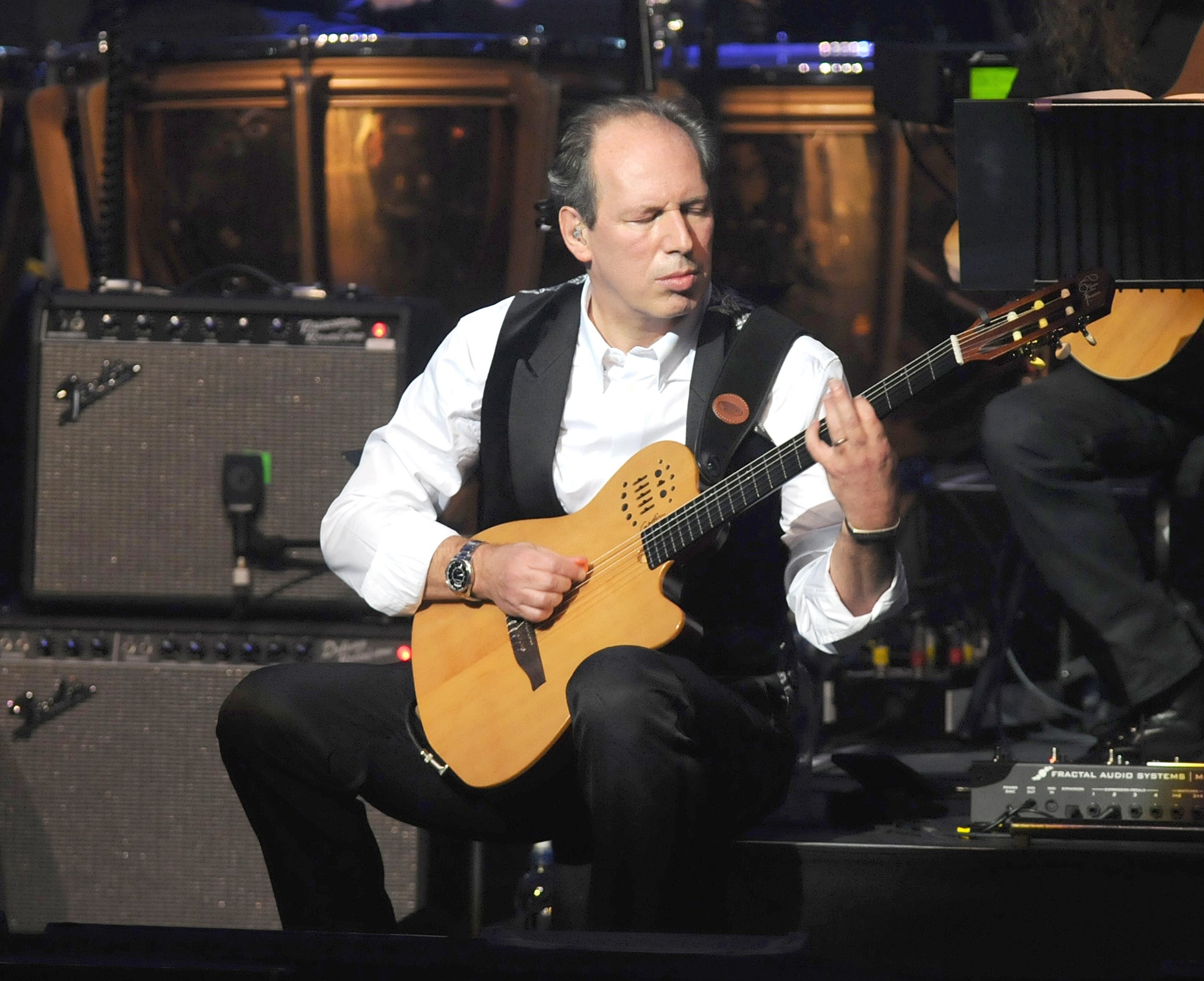
More like HANDSOME Zimmer, amirite?
(Please don't get a restraining order, I just like your work.)

Thirdly, you don't want anything that's too busy. Epic Trailer Music like Audiomachine or Two Steps From Hell can be lovely, but there's usually so much going on that it can get distracting, and detract from the game. Likewise - and I know this might sound strange and heretical - but that film soundtrack you love so much, the one that would be perfect for your RPG?

Don't use it. Ever.

Look, I love Hans Zimmer as much as the next guy, possibly even more. But his music is designed for films, which are timed down to the frame. Long quiet stretches are interspersed with sudden, dramatic crescendos. In the film, they tie in perfectly to the action. 

In an RPG, they come out of nowhere - they draw attention away from the story, and put it on the weirdly sudden burst of French horns and violas. Don't do it.

Finally, you want to avoid anything with lyrics in a language anyone speaks, and probably altogether (remember that bit about making space for the human voice? Competing human voices don't help.) It can work great in film, anime, even some video games - but ours is an auditory medium, and it's just too much information in the same channel.

Where do I get it from?


It bears repeating: not all music is going to work for these purposes. In fact, music that you like - because it's interesting - may not work so well. Because it's interesting. 

Stay away from anything designed for a symphonic orchestra - while this is some of the most beautiful music imaginable, it runs directly counter to our purposes. And while film scores tend to be pretty bad, video game soundtracks can be downright amazing for our purposes. They're designed to be more dynamic. Events don't happen at a set pace in games; your score needs to support myriad options in order to be successful. This, by the way, is exactly what we want. Beyond that, the New Age genre has some delightful contributions, as do many electronic "chillout" artists. 
Recommendations could - and soon will! - take up an entire post by themselves. But the key to remember is that you want something that's less dynamic than most music. Is there something you like, but find boring? Now's the time to bust it out.

Putting it All Together


So now that we've covered the basics, let's talk about actually putting together a soundtrack for your game. What follows is how I do it - it's not the One True Way, but it is A Way I Guess, which capitalises just as nicely.

When I'm getting ready to start a new campaign, I put together a couple playlists. I use Google Play, but anything that lets you assemble playlists is fine. I generally want a couple playlists ready to go:

  • A "Chill" playlist. This is my default, it sets the tone, but mostly provides ambiance
  • An "Action" playlist. Fight scenes, parkour chases, starship battles. Something more uptempo that delineates these scenes from normal play
  • A "Suspense" or "Investigation" playlist. Nothing too intense, but more downtempo, minor key stuff. 
  • An "Emotional" playlist, that's appropriate for sad, tragic, melancholic scenes.
And those are my big four. I'll usually have more - often lots more - but that should get me through most games I run. If you're less intent on dancing on your players' heartstrings4 then you could probably get away without the last one. Typically, I'll want the "Chill" playlist to be pretty long - something that covers the length of the game session, if I can help it. That way, if I want to just set it and forget it, I can do so without worrying that it'll cut out at an inopportune moment.

I personally like to stream music from a tablet to a bluetooth receiver - this way I've got my finger on the volume if I need it, and I can switch playlists with ease. When it comes time to switch, I'll often cue up the playlist I want to play next, so there's no jarring transitions.

Of course, sometimes I want jarring transitions. "Boss Fight Music" is a time-honored tradition, and one that I make extensive use of.

I also tend to make "pre-show" playlists. These are an artifact from my theatre days, where you want some music to play while people are making their way in. I've found that this is a good place for more involved compositions that I really like, but are probably too busy or dynamic to use during play.

I tend to think of this as "opening credits" music; it sets the tone while people are making their way in, getting snacks, catching up. I also like to open each game with the same piece of music, as I've found that to be wonderful for setting the tone of the game, as well as transitioning out of "social time" into "game time."

In Conclusion

Music is awesome. It's added so, so, so much to my games. I sincerely hope this can help you gain some of the same benefits that I have.

Rock on! Just, y'know, quietly and in the background :P

~Killstring


* * *

1 - Good thing too, as it didn't pay me enough to eat much else ;)

2 - Though if you are interested, this plays off concept like the Elaboration Likelihood Model's concept of Peripheral Routes, Framing Theory, Priming Theory, and every advertising technique in history. If you're interested in the topic, Cialdini's Influence: The Psychology of Persuasion, Revised Edition (affiliate link) is a super accessible resource. 
If I ever teach university again, I want to do a persuasion class called "Defense Against the Dark Arts." Influence will be required reading.

3 - When do you break this rule? When that's what you want! I ran a Mass Effect game to great success - my players hadn't played the series, but I had. It made a difference for me, and that influenced my descriptions. 

Incedentally, they're playing the video games now, and getting associations from our tabletop! 

4 - Hi players! How are your hopes and dreams this fine day? :D

Thursday, June 16, 2016

Table For One, Party of Twelve: Large, Small, and Single-Player RPGs

When we think about tabletop roleplaying games, we often conjure up images of a group of friends sitting around a table. Or kicking it on couches, if you're like me.

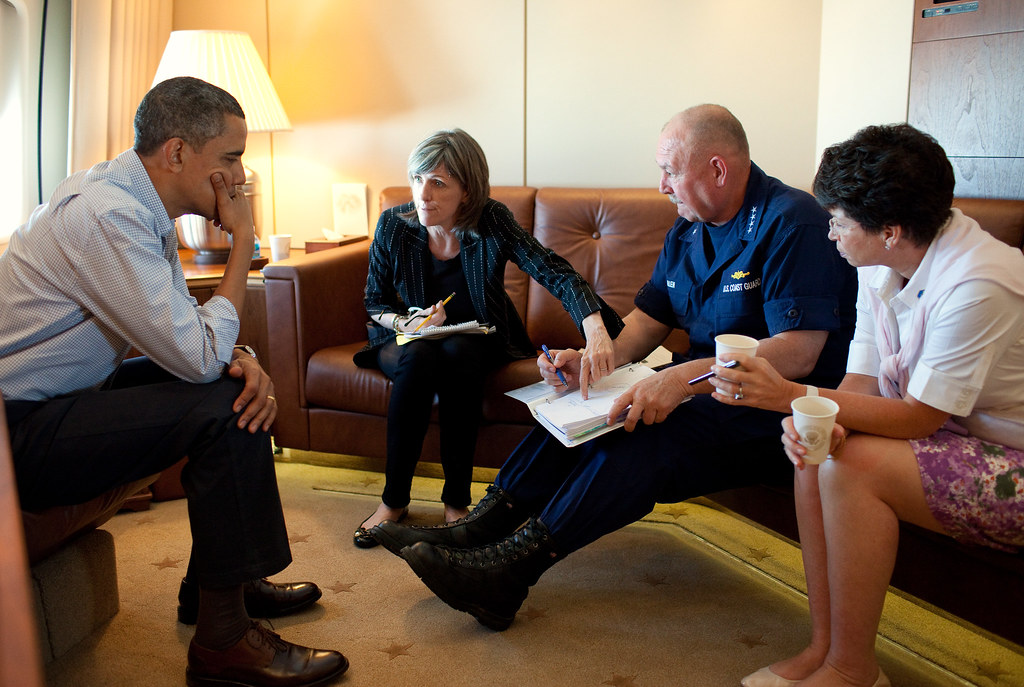
I have not gamed on Air Force One, with the President GMing. Otherwise, my games often look like this.
Either way, RPGs are an inherently social activity. So much of the discussion surrounding them touches on group communication dynamics, social contracts, and spotlight management1,which is as it should be; if your group dynamics are out of whack, your game will follow. But differently-sized groups will have different dynamics, and that topic is a little underexplored. If they talk about it at all, most RPGs tend to assume 3-4 players and one GM, defined as the "sweet spot," and leave it at that.

In reality, things can work out differently. Maybe you've got a friend who wants to play, is there room in the game? Maybe you have a lot of friends who want to play - is that still going to be ok?  What if you only have a couple folks who can make it. What if you've only got one? Is that ok? What's that going to do to the RPG dynamic?

Lots of unanswered questions.

The way I see it2, groups make games. Change the group, change the game. That's not a bad thing, nor is it a good thing, but it is a real thing and it can have a real effect. Some game concepts are less suited to one group size, and some play styles are advantaged differently. So let's take a look!

The Aforementioned "Sweet Spot"

So let's start out talking about the standard assumption. The roots of our hobby go back to the Roguelike Dungeon Crawls of early D&D3, and a lot of the baseline starts there. And in this case, we can see a pretty clear link: a "standard" D&D party consists of a Fighter, a Rogue, a Wizard and a Cleric. If you don't have one of those roles covered (beefcake, traps, arcane and divine magic, respectively,) you're going to have a rough time in that kind of game. 

And here we have the default assumption of four players with a GM. It can go up or down a little, but this is our baseline, a group of 4-6 people. Most RPGs are built with this in mind, and for good reason; there's a lot to advantage a group this size. 

Pros:

  • Manageable group size - people are unlikely to get lost, or feel overwhelmed
  • Enough people to foster inter-party discussion
  • Spotlight rotation only needs to balance between 3-5 players; there's more pie to go around

Cons:

  • Not quite enough people for real-time side conversations to break out
  • Sometimes you bring in people that are a poor fit to hit this threshold
  • Sometimes you exclude people who are a good fit to hit this threshold
In general, this is our baseline, the standard everything else gets compared to. It's used a lot, and despite its origins, it's quite versatile. 

Large Games

But what if you've got friends who want to game with you? What if you also want to game with them? Many games find themselves in this category quite by accident - my inaugural game for my university's RPG group wound up with a hefty ten players4 - because, you know, we get excited. That can be a good thing!

But I cannot recommend GMing for that many players unless you've got a specific game plan.

It can be a bit daunting.

For these purposes, I'm considering a "Large Game" to be anything with six or more players, as by that point, the mid-group dynamics just aren't there anymore.

Pros:

  • Inclusivity - you don't have to tell your homies there's no room at the tavern
  • Characters can probably cover just about any circumstance thrown at them
  • Enough players to run breakout scenes when the spotlight's elsewhere

Cons:

  • Spotlight management becomes increasingly difficult, players can feel marginalized
  • Telling a story with too many protagonists is a daunting task; can feel disjointed
  • Boredom and distraction is a constant risk.
If you find yourself with ten players, I heartily recommend looking into splitting into two smaller games. Having said that, large games can absolutely work - and they can even be stronger for their size - but there are some changes you'll want to look at.

Firstly is time. If you have three players, and you are perfect at mathematical spotlight balancing, then each of them gets 33% of the spotlight. Cool. Six players gets you 17%, seven means 14% and so on. And this can be ok if your group is good at interacting with scenes as a group, and keeping everybody involved - but it's work for everybody to do so. The players have a lot of responsibility to make that work.

Combat, or other structured activities, can become a real drag. Let's say that in the system you're using, combat turns take about three minutes. With a seven-person party, this can mean it take 20 minutes or more before your turn comes back around, and that's not accounting for anything the GM's doing. My personal guideline is that I want a lighter weight of system when running a larger game.

Interest just cannot survive that much down time. And in my experience, someone else's turn in a higher weight system usually feels like down time to players.

Additionally, if your gaming space can provide enough physical room for separate conversations to occur, this can turn a weakness into a strength. My favorite trick is to give information - usually in handouts, or at character creation - to different players, giving their characters different pieces of a puzzle they all want to see. They break off, put their pieces together, and often come up with theories about what it all means, where things are going, etc.

As a GM, I pay close attention to this stuff. That can be solid gold content.

Now, if you're thinking this sounds awfully close to a LARP, you'd be entirely correct. There simply isn't enough GM to go around with larger groups, and without the players' assistance, interest has a tendency to wane.

"One Car Games"

Named by one of my favorite GMs, who defines this as the entire game being able to fit in a car to go pick up dinner. Given that she drove a small 2-door at the time, this is a hard cap. Two or three players, one GM, and a tight focus. 

Pros:

  • A tight, concise experience. There's plenty of spotlight to go around
  • An unfolding narrative that can focus on a few leads without stretching too thing
  • Much easier to maintain focus

Cons:

  • Exclusivity - you may find yourself turning people away
  • Increasingly vulnerable to absentee players
  • Shy players might feel like they're not holding up their end of the bargain
Especially for groups that like a more intense storytelling experience, this can be even sweeter than the so-called sweet spot. If exploring crunchier rules is desired, the reduced time between turns can make that much more feasible. There's more time for in-depth character exploration, without the nagging sensation that you're hogging the spotlight too much, and being unfair to your fellow players.

It's got a lot to recommend it!

It also means that you might have to make some tough choices, and hurt feelings can absolutely be a casualty of this process. In games like D&D or Shadowrun, you might not have enough players to cover all your bases - this can lead to prominent NPCs coming along for the ride, which is frankly not every GM's strength. 

The reduced number of players has many effects - not the least of which being an increased workload for the GM - but it becomes even more pronounced in our next category.

Single-Player Games

So, I've probably logged more hours GMing this type of game than any other; not a small number over the years. They can be incredibly rewarding, highly demanding, and allow for massive amounts of detail, exactly where the player wants it.
You post-apocalyptic snowflake, you.

Pros:

  • No spotlight to split
  • You can tailor system, plot, genre, etc. uncompromisingly
  • Facilitates in-depth exploration

Cons:

  • Exhausting to run - the GM rarely gets to catch their breath
  • Highly exclusive
  • Limits available perspective
This allows a method actor to really, really dig into their character. A tactically-focused player might want to control several characters in combat, alleviating many of the issues of large battles and complicated rules. Someone who's really into political intrigue can just buckle down and chase it, without worrying that they're ruining the game for anyone else.

And of course, you get to be the hero. There's a reason why so much fiction has a sole protagonist; it's much easier to tell a story through one character's eyes.

Single player games have produced some of the most intense. memorable experiences in my gaming career. They also once stressed me out to the point where I was having serious anxiety issues. Like I said above, they can be intellectually and emotionally draining to prepare and run.

They're clearly not for everyone. But they can be incredibly vivid experiences.

In Conclusion: Talk About It

Group size has some noticeable effects on roleplaying games. The strengths and weaknesses above are by no means rules - you can have amazing games of all types throughout the spectrum; I certainly have - but it's worth thinking about the impact this'll have on your game. 

Talk about it as a group, and figure out what you're going to prioritize. If you want everybody to be able to play, go with something that plays to the strengths of a big group. If you've got a specific thing you want to do, maybe consider doing a smaller game with a subset of the group; especially if some folks are excited, and other's aren't.  And if you've got the time and opportunity, a single-player game offers a unique and distinct perspective that's worth experiencing.

Communication about what you want to do - before you get started - can go a long way towards a happy, healthy gaming environment. 

Which, you know, that's something I want at least. 

Cheers!
~Killstring

***

1 - For those unfamiliar, Spotlight is a term often used to describe where the focus is in an RPG. Think of it like the spotlight on a stage, or the camera's focus on screen - it's a way to talk about where the focus of the story is, and where it's been. Spotlight Management refers to the juggling act that is making sure that gets spread around all the players, so nobody's left out. 

It's hard! But it's a big part of the job (for both players and GMs.)

2 - There's a lot of great scholarly work done on group communication dynamics; most of it looks at business applications, but a lot of the observations are applicable any time you have a group of people coming together for a structured activity - like RPGs.  

If you're interested, there's some great work that's been done on the topic, though it can be a bit of a dry read. But if you're up for it, check out Symbolic Convergence Theory (its focus on "Shared Fantasy" is pretty applicable to gaming groups) and Structuration Theory if you want to think about how structure determines group behavior.

I love Structuration Theory. And I had a hell of a time wrapping my head around it in graduate school, so no worries if you want to pass.

3 - To be certain, this isn't the only thing that people have done with D&D, even back then. But it was what the early game was designed to do - later editions have done their own thing in different ways, and that's cool. But the roots are what we'd call a roguelike today, and that shows in many ways. :)

4 - And it worked out ok! I wouldn't recommend it, but we had a lot of shy first-timers, and everybody was supportive of the group dynamic. It eventually whittled itself down to a much more sane 6-player party. Still large! But much more manageable.